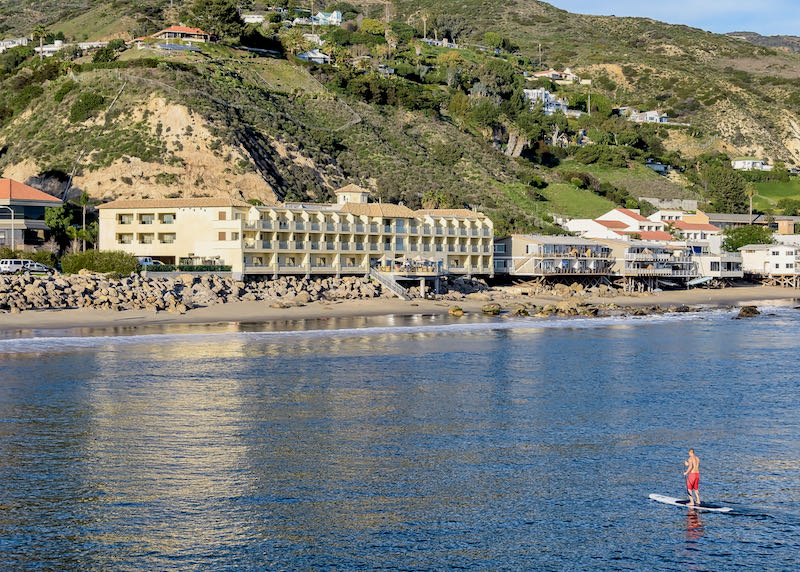
By Seattle Dave
Our Favorite L.A. Hotels
• 5-star: The Maybourne
• 4-star: JW Marriott (Downtown)
• 3-star: Freehand L.A.
• For couples: Kimpton La Peer
• For families: Fairmont Miramar
• Beach: Shutters • Casa del Mar
• Hotel pool: Beverly Hills
• Near LAX: Hyatt Regency
• Disneyland: JW Marriott
• Universal Studios: Hilton
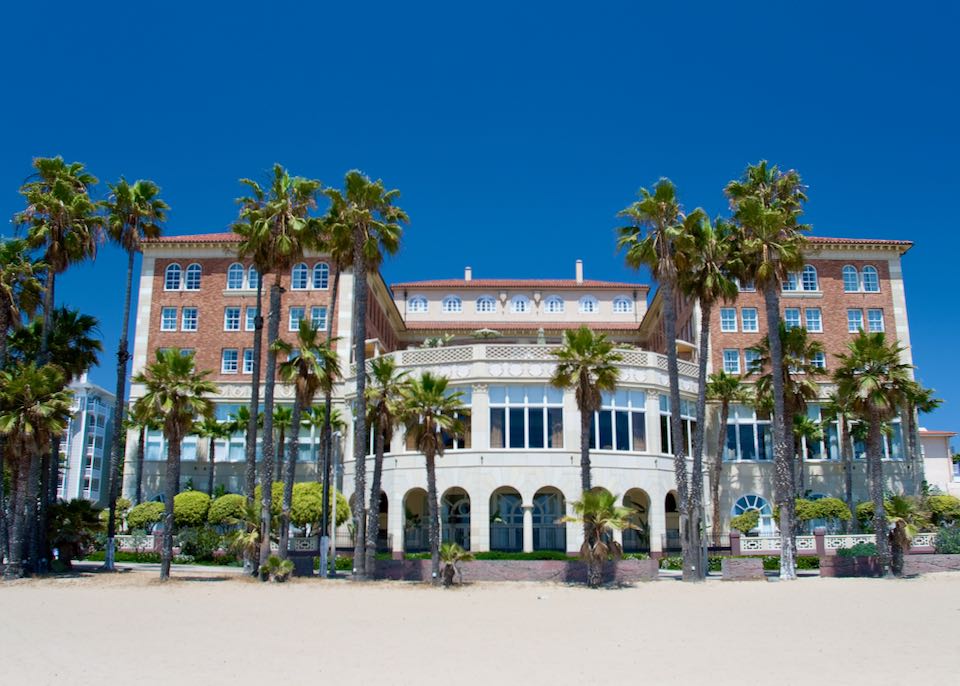
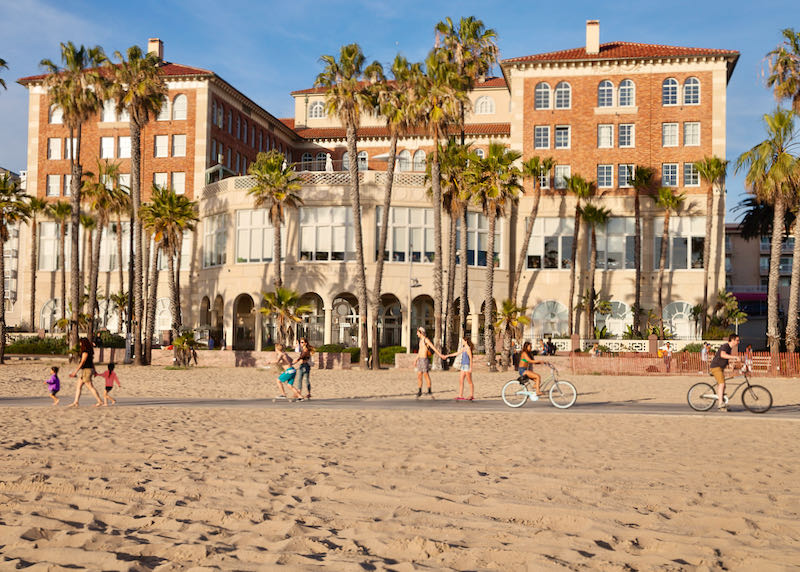
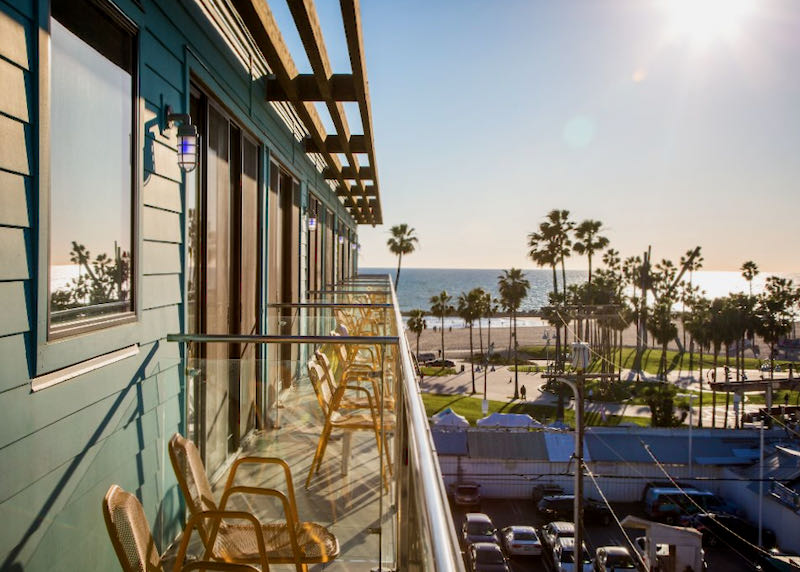
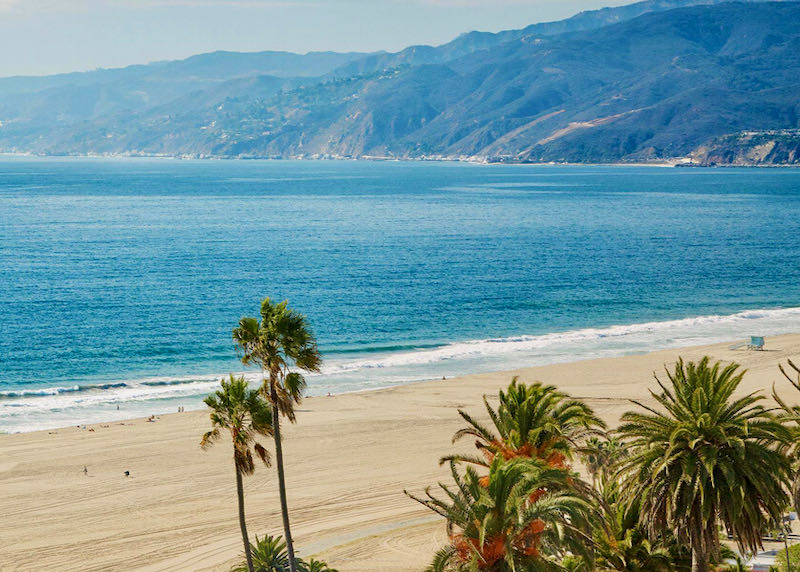
The awesome Hotel Casa del Mar on Santa Monica Beach in Los Angeles. A great location for first-time visitors to LA.
Best Areas to Stay in Los Angeles
Los Angeles is an immense collection of unique, well-defined neighborhoods that can feel like large cities themselves. Since the best things to do in LA are spread across a massive geographic footprint, there isn’t one “best” part of town to stay in. Your choice should depend on your specific interests: beaches, high-end shopping, celebrity sightings, art galleries, nightlife, or food. Accordingly, the best hotels in Los Angeles are not concentrated in one neighborhood but are scattered from the coast to the downtown core.
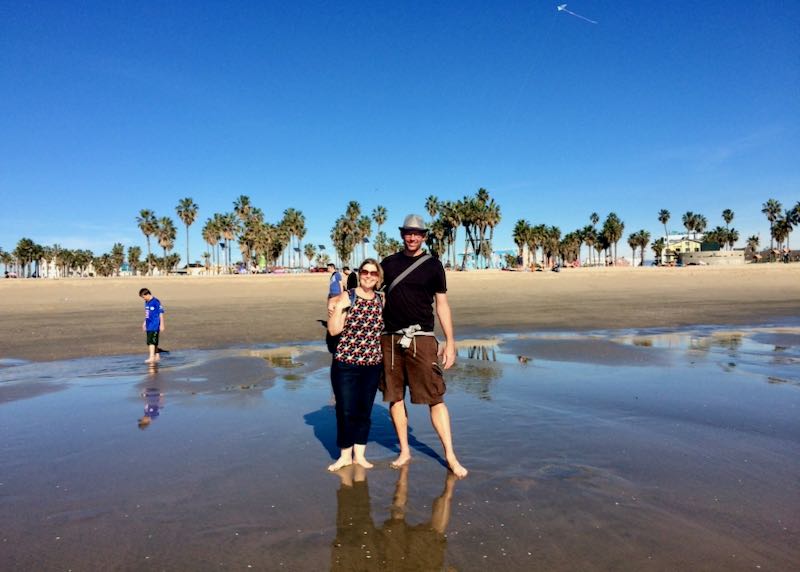
My wife and I on Venice Beach.
Downtown Los Angeles (DTLA) is the historic and financial heart of the city, packed with cultural attractions including Grand Central Market, Walt Disney Concert Hall, and the Broadway Theater District. It is the central hub for the Metro, making day trips via public transit straightforward. Be aware that DTLA is a city of contrasts; luxury hotels often sit blocks away from Skid Row.
Hollywood remains the major tourist hub. This is where you will find the TCL Chinese Theatre, the Walk of Fame, and the best views of the Hollywood sign. Hollywood is centrally located and serves as an excellent base for those exploring by car or Metro, though it can feel gritty after dark.
South of Hollywood, you will find Larchmont Village, the Wilshire District, and the Fairfax District. These neighborhoods offer a more local feel and host the Original Farmers Market, The Grove, and the trendy shops of Melrose Avenue and 3rd Street.
West of the center are the upscale enclaves of West Hollywood and Beverly Hills. West Hollywood (WeHo) is arguably the most walkable part of LA and is famous for the Sunset Strip and its vibrant nightlife. Beverly Hills is the home of Rodeo Drive and legendary luxury hotels like the Beverly Hills Hotel.
The coast is anchored by Santa Monica and Venice. These are L.A.’s most celebrated beach towns, perfect for experiencing California beach culture. They are excellent for first-time visitors who want a walkable environment but are a long commute from inland cultural attractions. Affluent Malibu, further west, is best treated as a standalone destination; it is an easy day trip but too isolated to serve as a base for exploring the rest of L.A.
At the city’s south end, Long Beach and San Pedro are real surprises. They are crammed with family-friendly attractions like the Queen Mary and the Aquarium of the Pacific, though they require a long commute to reach Central LA.
Beyond the city proper, the San Fernando Valley (the “Valley”) is home to major movie studios in Burbank and Universal City. To the east, the San Gabriel Valley is anchored by historic Pasadena, a fun city with a distinct personality. To the south, Orange County features Anaheim, the home of Disneyland.
Driving is the standard way to navigate L.A., but traffic is heavy nearly all day. For visitors, driving is rarely the fastest way to cross the city center. We recommend a car primarily for exploring Greater L.A. areas like Malibu, The Valley, or Orange County. For these trips, a rental is more cost-effective than Uber or Lyft, which become expensive quickly due to L.A.’s long distances.
L.A.’s Metro system is now much more efficient thanks to the Regional Connector, which allows riders to travel across the city without transferring at Union Station. Note that Metro has moved to a letter-based naming system:
- B Line (formerly Red): Connects Downtown L.A. to Hollywood and North Hollywood.
- D Line (formerly Purple): Connects Downtown L.A. to Koreatown and is the best route for the Miracle Mile.
- E Line (formerly Expo): Connects Santa Monica to Downtown L.A. and East L.A.
- A Line (formerly Blue/Gold): Runs from Long Beach through Downtown L.A. to Pasadena.
Fares are a flat $1.75 per ride. You must use a TAP card (available as a physical card or on your smartphone). L.A. utilizes Fare Capping, which is a huge benefit for travelers. You will never pay more than $5 per day or $18 per week. Once you hit those spend limits, all additional rides in that time period are free.
For short hops within a single neighborhood, DASH buses are excellent. They serve areas like Downtown, Hollywood, and Los Feliz. Fares are typically $0.50 (or $0.35 with a TAP card), making them the cheapest way to move around locally without a car.
The weather in Los Angeles is dry and sunny for the majority of the year, but visitors should understand the distinct regional microclimates. Average highs in the summer and early fall (August–September) reach the mid-30s°C (mid-90s°F), especially inland, while winter highs stay a comfortable low 20s°C (low-70s°F).
Mid-September through mid-October is arguably the best time to visit; the summer crowds have vanished, the water is at its warmest, and the air is clear.
Travelers should be aware of three specific weather patterns:
- Winter Rain (January–March): Historically, this is the rainiest period. However, 2025 saw record-breaking rainfall and storms as early as November and December. While it rarely rains for more than a few hours, when storms do hit, they can cause significant localized flooding.
- May Gray & June Gloom: If you are staying in Santa Monica, Venice, or Malibu in late spring, expect a thick marine layer of low clouds and fog. This often keeps the coast 10 degrees cooler than inland areas and may not “burn off” until mid-afternoon.
- Santa Ana Winds: Occurring mostly in autumn, these hot, dry winds from the desert can cause temperatures to spike suddenly and increase fire risk in the hills.
Always pack a light jacket or sweater regardless of the season. Because L.A. has a coastal desert climate, temperatures drop significantly the moment the sun goes down.
One thing to note in Los Angeles: Book hotels early. There are many sporting events, conventions, and conferences throughout the year, including star-studded galas like the Grammys and Academy Awards. Booking a hotel during events like these and throughout summer should be done about 3 to 4 months in advance. For slower seasons, try to reserve rooms at least a month in advance.
Best Places to Stay in Los Angeles
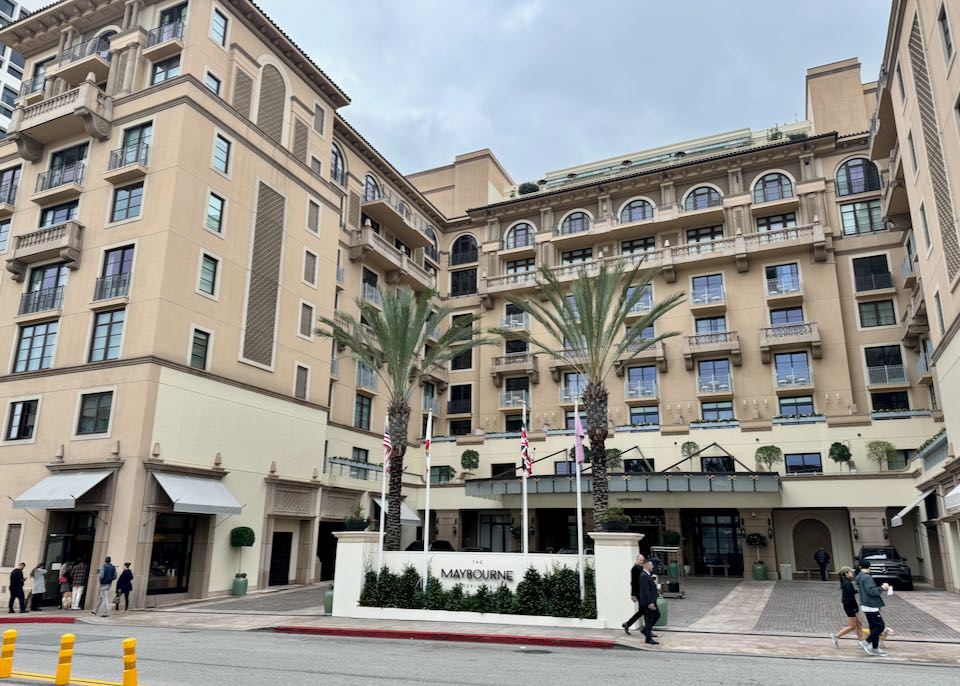
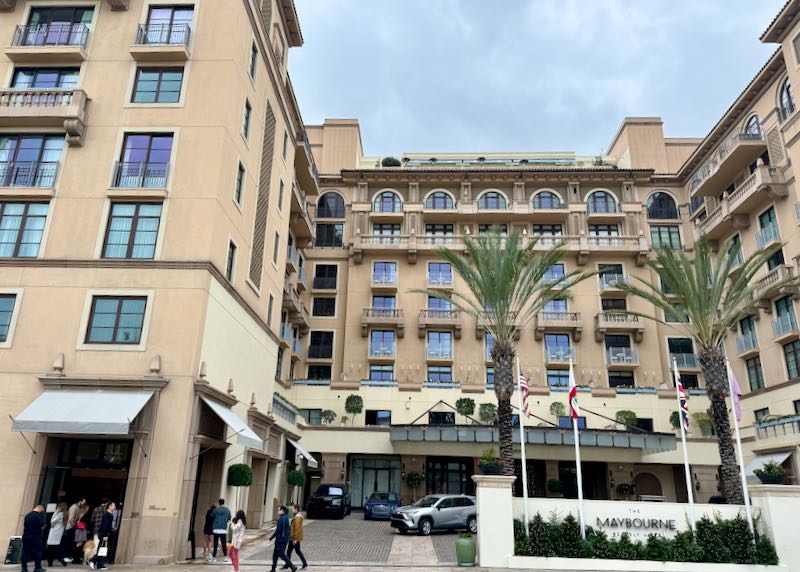
The Maybourne is the best luxury hotel in Beverly Hills. A two-minute walk from Rodeo Drive and the Golden Triangle. The California and Hollywood suites are particularly wonderful.
- Best Luxury Hotels in Los Angeles
The Maybourne • Beverly Wilshire • Shutters on the Beach • Hotel Bel-Air • Beverly Hills Hotel • Ritz-Carlton Downtown- Best Beach Hotels in Los Angeles
Shutters on the Beach • Hotel Casa del Mar • Hotel Erwin • Surfrider Hotel Malibu • Oceana Santa Monica- Best Boutique Hotels in Los Angeles
Kimpton La Peer Hotel • Malibu Beach Inn • Plaza La Reina • Surfrider Hotel • Nobu Ryokan Malibu- Best Hotels for Families in Los Angeles
JW Marriott Downtown • Four Seasons at Beverly Hills • Fairmont Miramar • Langham Huntingon Pasadena • Andaz West Hollywood • Holiday Inn Express Hollywood- Best Cheap/Midrange Hotels in Los Angeles
SIXTY Beverly Hills • Freehand (Downtown) • Holiday Inn Express Hollywood- Best Hostels in Los Angeles
HI Los Angeles Santa Monica Hostel • Samesun Hollywood • Samesun Venice Beach
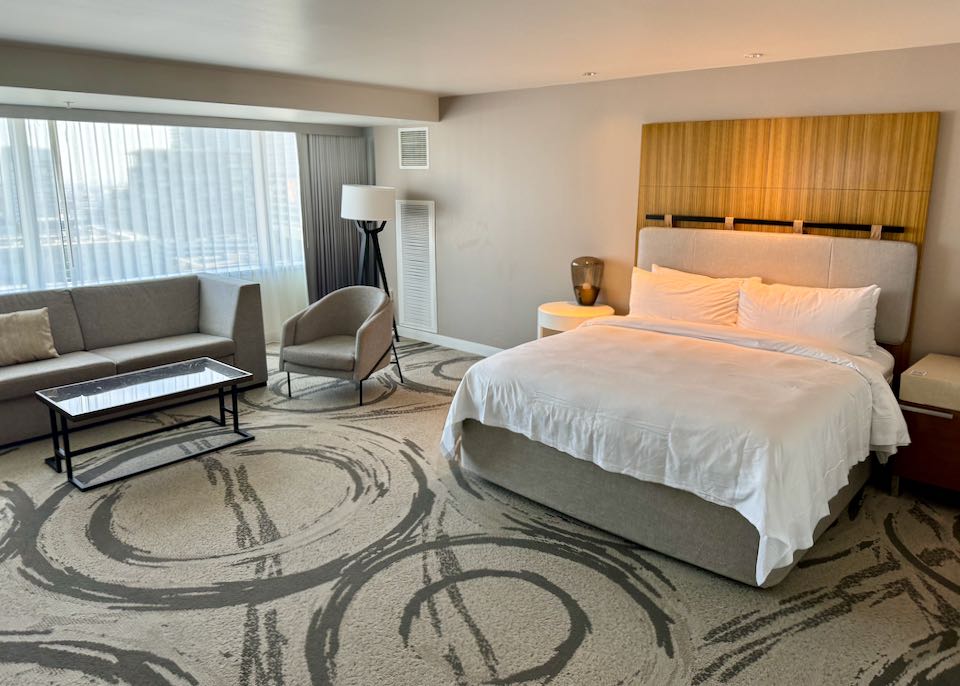
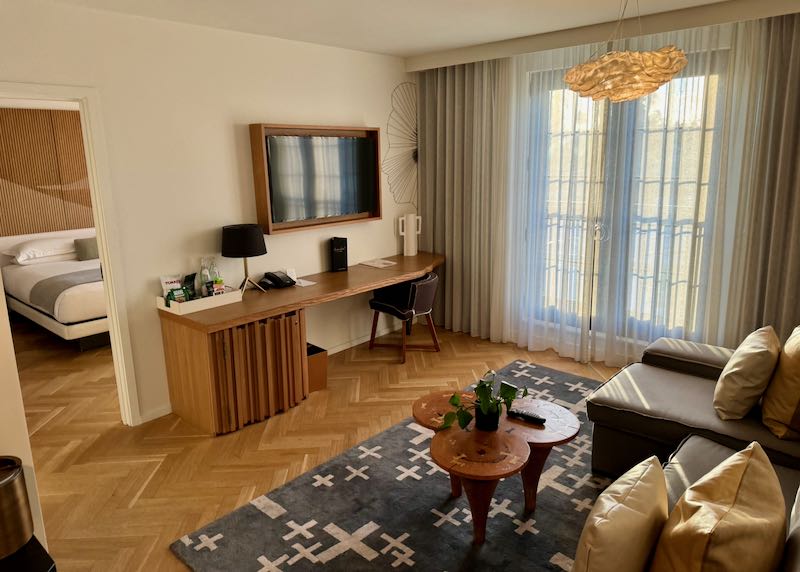
Our suite at the JW Marriott in downtown Los Angeles.
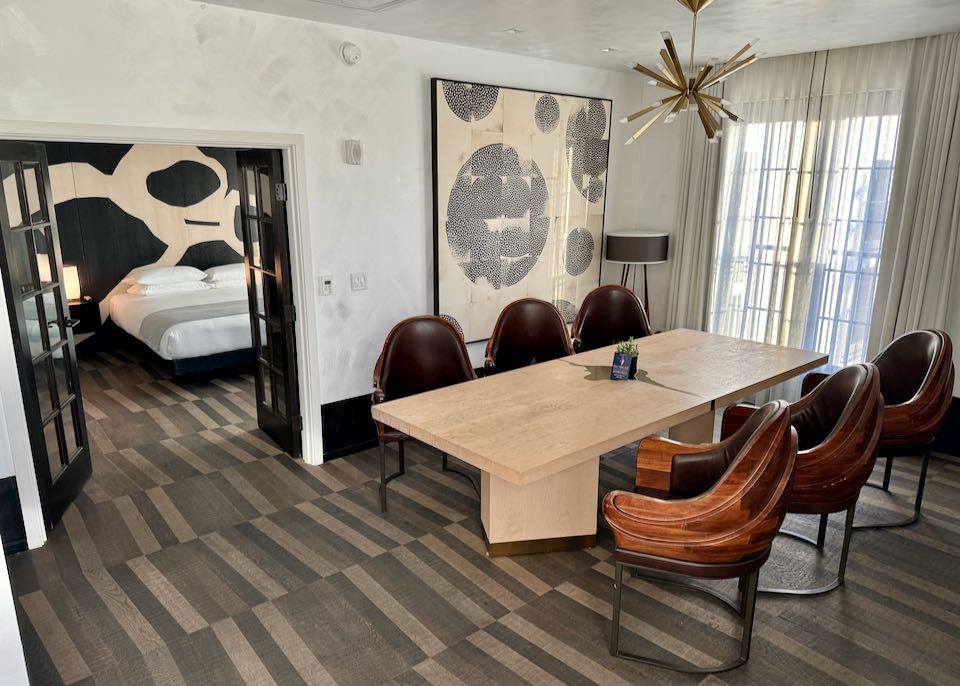
Our suite at the Kimpton La Peer Hotel in a quietly trendy neighborhood of West Hollywood. There’s a nice walking path nearby that goes all the way to Beverly Hills.
Best Neighborhoods in Los Angeles for…
- Best Neighborhoods in Los Angeles to Stay for First Timers: Hollywood, Santa Monica, and West Hollywood
The most important thing for first-time visitors to realize is that L.A. is massive and traffic is heavy. Choosing a neighborhood based on your primary goals is the only way to avoid spending your entire vacation in a car. We recommend focusing on Hollywood, Santa Monica, or West Hollywood.Santa Monica is the best choice if you want the classic California beach experience. It features a walkable downtown, excellent shopping, and a dynamic culinary scene. The Santa Monica Pier is home to an amusement park, an arcade, and the iconic sign marking the end of Route 66. The E Line (formerly Expo Line) provides a direct rail connection to Downtown L.A. For a luxury stay, the former Loews has reopened as the Regent Santa Monica Beach, joining Shutters on the Beach and Hotel Casa del Mar as top-tier options. The main downside is that staying on the coast makes exploring inland L.A. (like Hollywood or Silver Lake) a significant time commitment.
Hollywood is the most central base for sightseeing. You are steps from TCL Chinese Theatre, the Walk of Fame, and the B Line (formerly Red Line) subway. It is the best area for visiting Universal Studios Hollywood (which debuts its high-speed Fast & Furious: Hollywood Drift coaster in 2026), Griffith Observatory, and the Hollywood Bowl. While highly touristy and occasionally gritty at night, its central location is unbeatable for those without a car.
West Hollywood (WeHo) is our top recommendation for those who want a blend of central location and high-end walkability. It sits between Hollywood and Beverly Hills and is the city’s nightlife hub, home to the Sunset Strip and legendary venues like the Whisky a Go Go. It is generally safer and cleaner than Hollywood proper while remaining close to the action.
My family and I at a Laker game.
- Best Neighborhoods in Los Angeles for Nightlife: Hollywood and West Hollywood
Los Angeles offers a massive range of clubs and bars, but Hollywood and West Hollywood are the primary nightlife hotspots.Hollywood is home to some of L.A.’s most legendary watering holes. For a classic feel, visit Musso & Frank Grill (famous for its martinis), Boardner’s, or the Frolic Room, which has been a staple dive bar next to the Pantages Theatre since 1930. The Formosa Café and Burgundy Room also offer plenty of vintage Hollywood character. For high-end rooftop vibes, the W Hollywood and Hollywood Roosevelt pools are top picks. Comedy fans should head to the Upright Citizens Brigade Theatre (UCB) on Franklin Avenue or The Second City on Hollywood Boulevard. For electronic music and large-scale clubs, Avalon Hollywood, Academy LA, and Sound Nightclub are the most dependable options. Most live music and club sets don’t kick off until after 9:00 pm.
West Hollywood is just a short ride away and is anchored by the legendary Sunset Strip. You’ll find world-famous music venues here like The Roxy, Whisky a Go-Go, and The Troubadour (located just off the Strip on Santa Monica Blvd). Note that the iconic Viper Room is currently part of a long-term redevelopment project; while it has historically been a must-see, check its current operating status before visiting. For comedy, The Comedy Store is the heavy hitter on the Strip. West Hollywood is also the center of L.A.’s LGBTQ+ nightlife, primarily concentrated along the vibrant stretch of Santa Monica Boulevard.
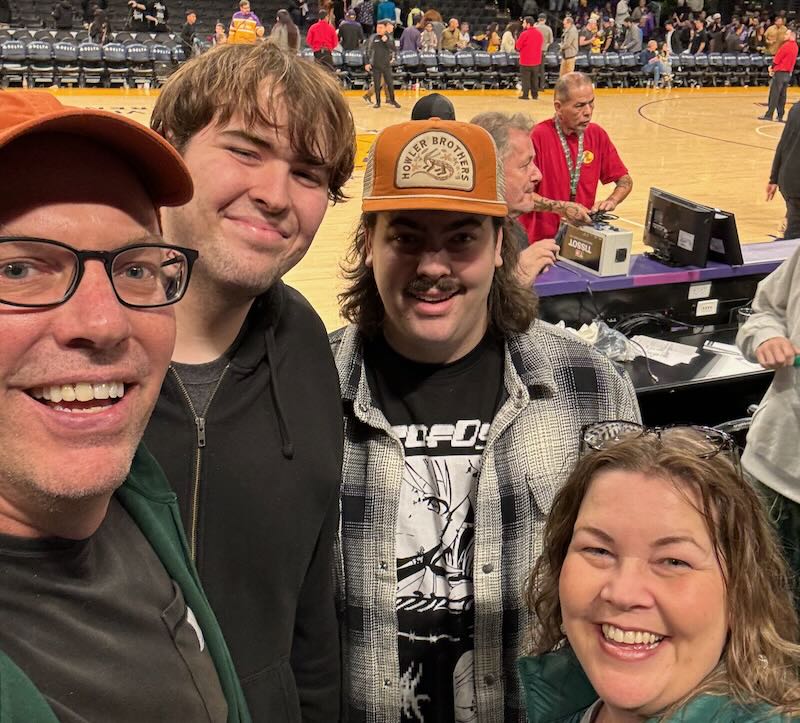
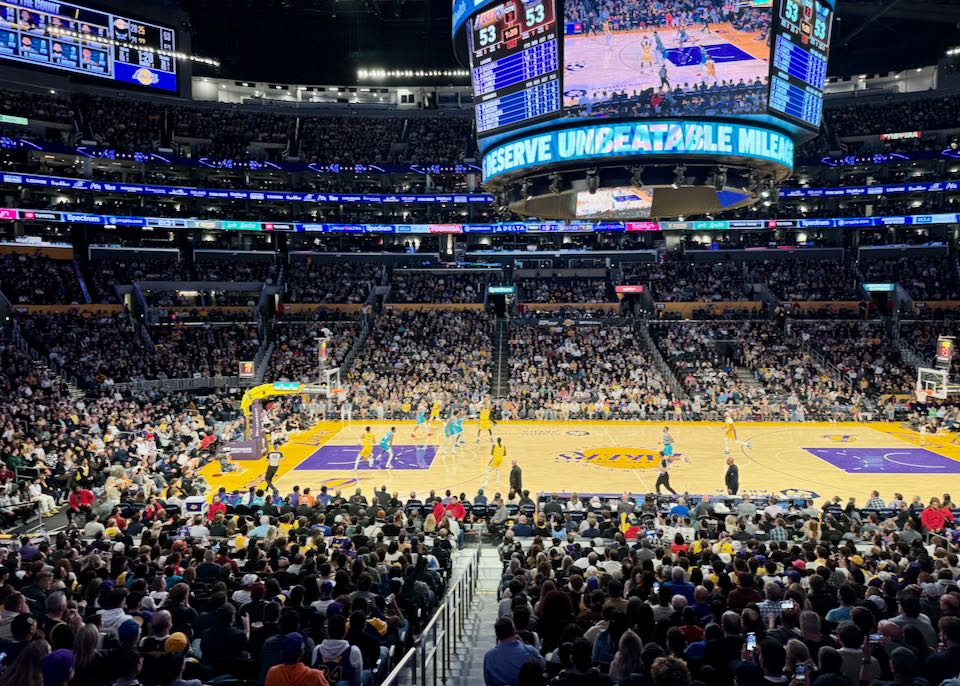
Watching a Lakers game at Crypto Arena is a must for basketball fans.
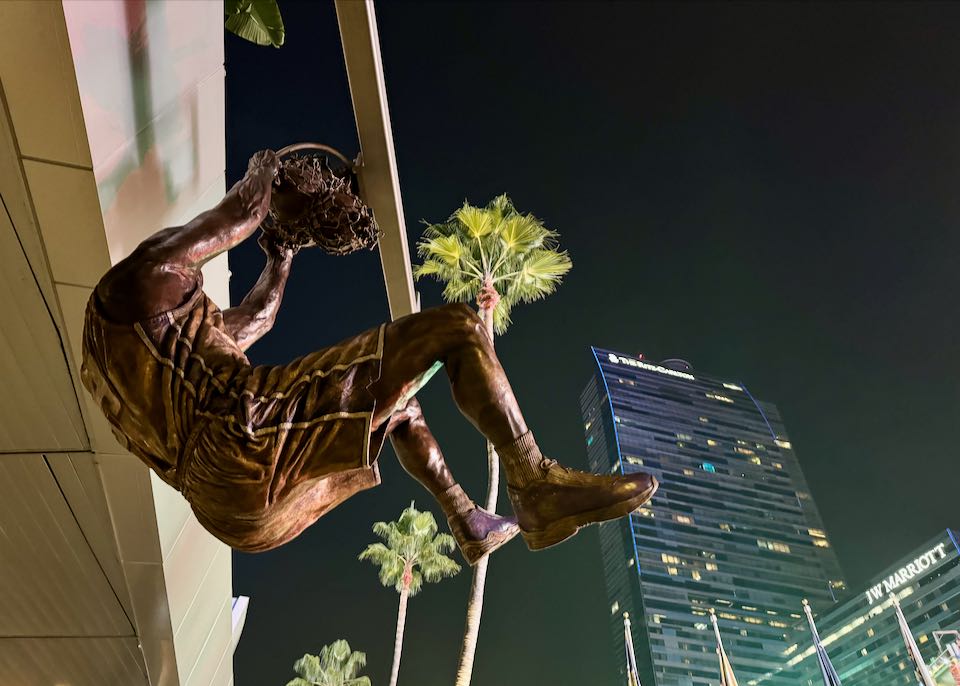
A statue of Shaq outside Crypto.com Arena. The Ritz-Carlton and JW Marriott are the two best hotels close to the arena. Both are a two-minute walk from Lakers, Clippers, Kings, and Sparks home games.
- Best Neighborhoods in Los Angeles for Food and Restaurants: Beverly Hills, Santa Monica, Downtown, and Silver Lake
Los Angeles is arguably the best food city in the country right now. While great meals are scattered everywhere, these four neighborhoods offer the highest concentration of quality.Beverly Hills and Santa Monica are the hubs for upscale, high-end dining. In Beverly Hills, you’ll find classics like Spago and the intimate Maude. For the quintessential “power brunch,” The Polo Lounge at the Beverly Hills Hotel is the top choice. Note that the legendary Nate ‘n Al’s is currently slated for redevelopment but is expected to remain in its historic location through summer 2026.
Santa Monica is a culinary powerhouse, especially for the 2026 season which marks the 100th anniversary of Route 66 (which ends here). Main Street and the surrounding blocks feature Pasjoli and Melisse, while Bergamot Station hosts the creative comfort food of Birdie G’s. For something more casual but high-quality, check out Colapasta or Socalo. Fia is my favorite for a garden brunch, and Forma is excellent for Italian. Old-school favorites Father’s Office and Red O are still going strong.
Downtown LA (DTLA) offers the most diversity. The Arts District is the city’s current “it” neighborhood for dinner, anchored by Bavel, Bestia, and Redbird. For a historic experience, the French Dip sandwich was born here – try both Philippe the Original and Cole’s French Dip to decide for yourself. Original Pantry Café is the classic 24/7 diner choice. Don’t miss the food stalls at Grand Central Market, and for sushi, Sugarfish or the ramen at Daikokuya in Little Tokyo are reliable hits.
Silver Lake is where to go for a local, hipster-vibe with incredible food. Pine & Crane is a must for Taiwanese, while Spoon & Pork serves modern Filipino. For coffee and breakfast, Dayglow and All Day Baby are standout spots. While lodging is scarce in the area, the Silver Lake Pool & Inn is a great boutique choice if you want to be in the heart of this scene.
Finally, the Fairfax District is the city’s deli headquarters with the historic Canters and the Original Farmers Market. For authentic international flavors, head to Thai Town (East Hollywood) or Little Armenia nearby.
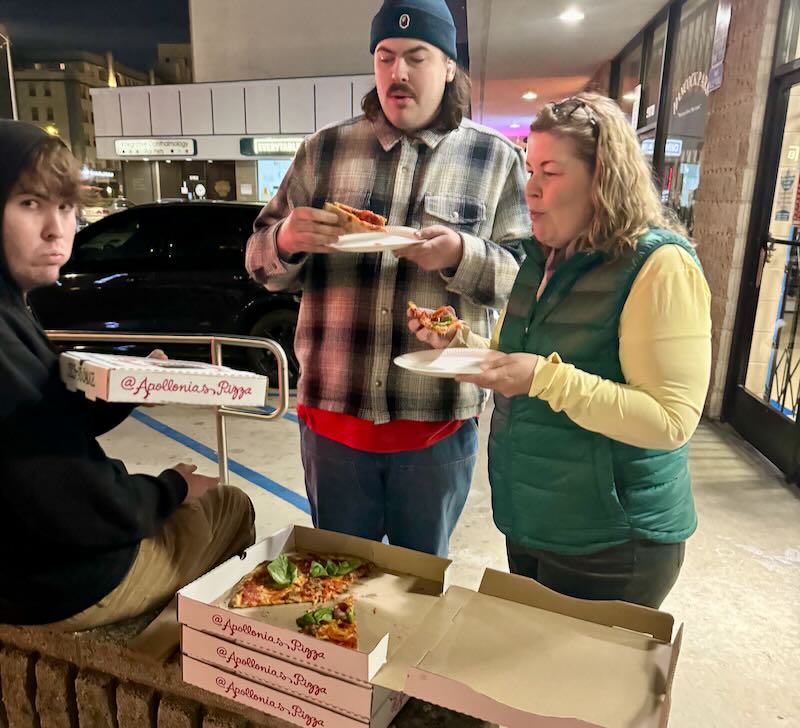
Having Apollonia’s Pizza (it’s only takeaway) – reputedly the best pizza in LA.
- Best Neighborhood in Los Angeles for Families: Santa Monica
This beach city is the top pick for families due to its walkability and high concentration of kid-focused activities. The centerpiece is the Santa Monica Pier, which celebrates the 100th anniversary of Route 66 in 2026. Families can visit the iconic End of the Trail sign and explore Pacific Park, the only pier-based amusement park on the West Coast. New for the 2026 season is the Funhouse at Pacific Park, a 2,800-square-foot attraction filled with optical illusions and mirror mazes. For younger children, the Heal the Bay Aquarium is located directly beneath the pier, offering touch tanks and exhibits on local marine life.Beyond the pier, the Annenberg Community Beach House is a must-visit. It features a public pool, a splash pad, and a playground right on the sand. For a break from the sun, the Cayton Children’s Museum at Santa Monica Place offers 21,000 square feet of interactive play space. In the summer of 2026, the pier will also host a World Cup Fan Club for the FIFA World Cup matches being played in Los Angeles. The 22-mile Marvin Braude Bike Trail (known locally as The Strand) starts here and is perfect for a family bike or surrey rental down to Venice Beach.
- Best Neighborhoods for Couples: Malibu and Santa Monica
Los Angeles is home to some of the most romantic and iconic hotels in the world. The coastal stretch from Santa Monica to Malibu is the gold standard for couples, offering a mix of high-end seclusion and cinematic views.Malibu is the ultimate choice for a honeymoon or romantic escape. It offers a laid-back, “Billionaire’s Beach” vibe with exclusive spots like Nobu Malibu (book at least a month in advance) and Geoffrey’s for cliffside dining. For a unique date, consider a Vintage VW Bus Vineyard Tour through the Santa Monica Mountains or a sunset visit to El Matador State Beach, famous for its sea caves and dramatic rock formations. While high-end spots like Carbon Beach Club are popular, you can still find romance at the ocean-facing Paradise Cove Beach Café or by sharing a plate of fish and chips at Malibu Seafood while watching the Pacific. The Malibu Beach Inn and the ultra-exclusive Nobu Ryokan are the best oceanfront stays, though the Surfrider Hotel offers a cooler, boutique alternative directly across from the historic Malibu Pier.
Santa Monica offers a more active romance with its walkable downtown and legendary sunsets. Celebrate the 100th anniversary of Route 66 with a stroll to the “End of the Trail” sign on the pier. For an upscale evening, Shutters on the Beach and Hotel Casa del Mar provide candlelit, waterfront dining that is hard to beat. New in 2026, The Sandbourne Santa Monica (occupying the former Le Merigot site) has opened as a stylish, design-forward beachfront option featuring the Mediterranean-inspired restaurant Marelle. Beyond the beach, a visit to the Getty Villa in nearby Pacific Palisades offers a romantic escape into an ancient Roman-style estate, while a night at the Griffith Observatory for stargazing is a classic L.A. “La La Land” moment.
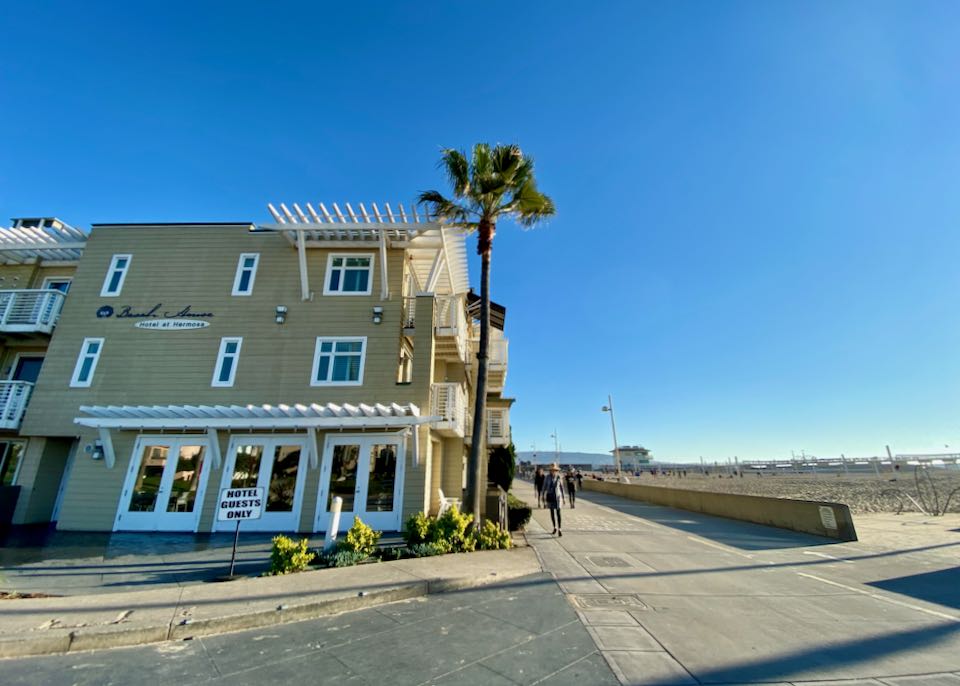
The Beach House on Hermosa Beach, one of our favorite beachfront hotels in the Los Angeles region and just a 20-minute drive from LAX.
- Best Neighborhoods in Los Angeles for a Local Vibe: Los Feliz, Silver Lake, Larchmont Village, Echo Park, and Hermosa Beach
These neighborhoods offer a great opportunity to meet locals and get a much different viewpoint of Los Angeles. Larchmont is a neighborhood just below Melrose Blvd and near Hancock Park that has a quaint old-town shopping street and beautiful historic homes. Los Feliz is a neighborhood with plenty of old-school watering holes, hip shops, and cafés. It is also home to two Frank Lloyd Wright homes. The neighborhood borders Griffith Park where you’ll find several great hiking trails, the Greek Theatre, and the Griffith Observatory. Just east of Los Feliz is the neighborhood of Silver Lake. It’s an artsy area drawing a hipster crowd, with its several funky shops, street art, artisanal coffee shops, creative eateries, and indie music venues.Around three miles northwest of Downtown LA is Echo Park. Set around Echo Park Lake (where you can rent swan paddleboats) and a short stretch of Sunset Boulevard, it’s an easy-going neighborhood of artists, musicians, and hipsters, with cool restaurants and coffee shops that tend to be (relatively) cheap for LA. There’s not a lot to see, but Mohawk Bend deserves at visit. There’s not much choice in terms of accommodation: Noon on Sunset Hill is the best of a very small list, with Downtown LA otherwise the closest place to stay.
For a beach vibe we recommend Hermosa Beach, which still retains a bohemian 1960s’ and laid-back surfer feel despite being a relatively affluent community today. Other than strolling the pleasant boardwalk, Hermosa Beach Pier, and the beach itself, there’s not much in the way of sights, but nightlife is surprisingly good. Lighthouse Café opened as a jazz club in 1949, and there’s a large array of surfer bars and dives – try Hennessey’s Tavern. Again, there’s not much choice when it comes to hotels here, but the best are Beach House and H2O Hermosa.
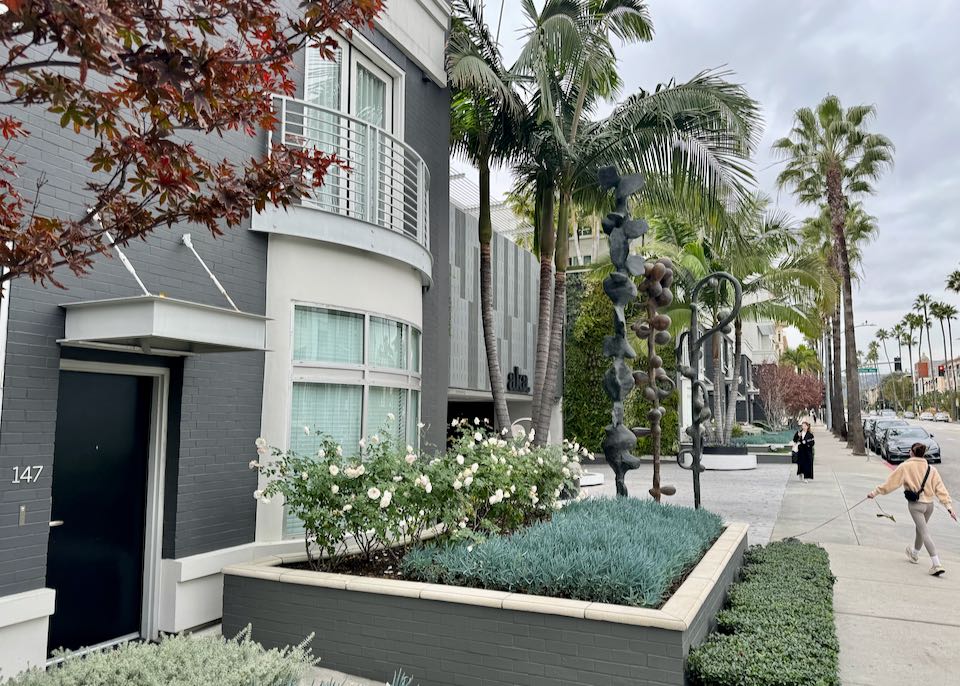
The one-bedroom and two-bedroom townhomes at AKA Beverly Hills have their own entrance and a full kitchen. They do need to be rented for at least a week.
- Best Neighborhoods in Los Angeles without a Car: Downtown LA, Hollywood, West Hollywood, and Santa Monica
The idea that nobody walks in LA is a myth, especially in 2026 with the full integration of the Metro Regional Connector and the upcoming opening of the LAX Automated People Mover. If you want to avoid driving, these four areas are your best bets.Santa Monica and Venice Beach are connected by the Marvin Braude Bike Trail, a 22-mile paved path along the Pacific. Santa Monica is the terminus of the E Line (formerly the Expo Line), which provides a straight shot to Downtown LA. The city is highly walkable with a robust local bus system (Big Blue Bus) that connects to UCLA and the Getty Center.
West Hollywood is one of the most walkable cities in California. At just 1.9 square miles, it is dense with restaurants, shops, and nightlife. While it lacks a direct Metro rail station, it is served by frequent bus lines and the city’s own free trolley, The PickUp, which runs along Santa Monica Boulevard on weekends. It is also a primary zone for Metro Micro, an on-demand rideshare service that costs only a few dollars.
Hollywood is the city’s primary transit hub. The B Line (formerly Red Line) subway connects you to Universal Studios in minutes and Downtown LA in about 15. The neighborhood itself is compact and best explored on foot, especially around the TCL Chinese Theatre and the various entertainment complexes.
Downtown LA (DTLA) is the most transit-accessible neighborhood in Southern California. The Regional Connector has made it possible to travel from Long Beach to Pasadena or Santa Monica to East LA without changing trains. You can zip between the Arts District, Little Tokyo, and the Financial District using DASH buses, which cost $0.50 per ride. DTLA is home to world-class museums like The Broad and MOCA, and major venues like the Crypto.com Arena and the Peacock Theater. For travelers, the new K Line extension and the LAX People Mover will finally provide a reliable rail-to-airport link, making a car-free stay in DTLA even more practical.
- Best Neighborhoods for Shopping: West Hollywood, Venice, and the Arts District
Los Angeles is a sprawling retail paradise, but recently, the focus has shifted toward walkable districts that blend flagship luxury with gritty, indie labels.West Hollywood is the city’s undisputed fashion capital. For a massive, one-stop experience, the Beverly Center features eight stories of high-end and contemporary brands. Just nearby, The Grove offers a manicured, outdoor mall experience next to the Original Farmers Market – complete with a trolley and dancing fountains. However, for a more curated L.A. vibe, walk Melrose Avenue. The “West Melrose” stretch (near La Cienega) is home to upscale boutiques like Rag & Bone and Glossier, while Melrose Place – famous for its ivy-covered walls – hosts ultra-luxury designers such as The Row and Isabel Marant.
Venice is home to Abbot Kinney Boulevard, famously dubbed “the coolest block in America.” This mile-long stretch is the place to find “L.A. Style” – effortless, artistic, and expensive. You’ll find flagship concepts from Everlane, Aviator Nation, and Cuyana alongside niche wellness shops like Le Labo. Keep an eye out for newer additions like 12th Tribe, which brings a polished travel-influencer aesthetic to the street. If you want something more bohemian, the Venice Boardwalk still offers classic surf shops, beach jewelry, and local street art.
The Arts District (DTLA) has officially arrived as a major shopping destination. This neighborhood trades polished storefronts for converted industrial warehouses. ROW DTLA is the anchor here, a massive historic complex housing independent boutiques like Bodega (hidden behind a faux-snack shop entrance) and A+D Architecture and Design Museum. Nearby, you’ll find Hauser & Wirth, which pairs a world-class art gallery with the excellent Artbook shop. It’s the best place in the city to find “Made in L.A.” goods, from the custom bags at House of Woo to rotating curated collections at Alchemy Works.
- Safest Areas of Los Angeles
Los Angeles’ safest neighborhoods are concentrated in the affluent residential enclaves and coastal communities. Neighborhoods like Bel Air, Beverly Hills, Malibu, Pacific Palisades, and Hermosa Beach are the gold standard for safety. West Hollywood is also a very safe and walkable base for tourists, though standard urban awareness is required. For travelers looking for a quieter, suburban feel, Porter Ranch in the San Fernando Valley and Mar Vista on the Westside are consistently ranked as some of the safest zones in the city. Most tourist areas are perfectly safe during the day, but it is important to stay alert at night. Some beach cities, particularly Venice Beach, can be unpredictable after dark and often attract a transient population that can feel intimidating to first-time visitors.- Unsafe Areas of Los Angeles
Safety in L.A. can change quickly from one block to the next. While most tourist hubs are secure, there are specific areas travelers should avoid. Downtown L.A. contains Skid Row (centered around 6th and San Pedro Streets), which has one of the highest concentrations of unsheltered individuals in the country and should not be explored on foot. Other areas with high crime rates include South Central, Watts, Compton, and the Westlake/MacArthur Park district. Visitors should note that city officials have increased the clearing of encampments in high-traffic tourist areas like Hollywood and Venice following recent legal rulings. However, homelessness is a visible reality in Downtown, Hollywood, and near the beach. As with any major city, stick to well-lit, populated streets at night and avoid walking alone in unfamiliar territory.[Image of Los Angeles safety and neighborhood map]
The 13 Best Neighborhoods in Los Angeles for Tourists
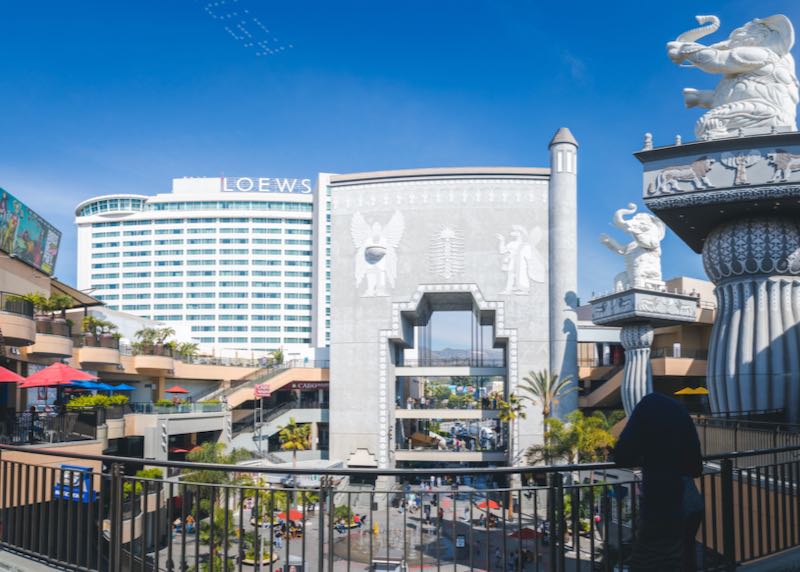
The Loews Hollywood is fantastic if you want to be near the center of the action, steps from the Walk of Fame.
1. Hollywood
Hollywood is the most strategic home base for first-time visitors to Los Angeles, particularly if you want to avoid the stress of a rental car. This neighborhood serves as the city’s primary transit hub, centered on the B Line (formerly the Red Line) subway, which provides direct access to Universal Studios and Downtown L.A.
Hollywood Boulevard is a dense corridor of film history and massive entertainment complexes. The former Hollywood & Highland center has been rebranded and renovated as Ovation Hollywood, offering the best street-level views of the Hollywood Sign from its upper-level viewing decks. Directly adjacent is the TCL Chinese Theatre, famous for its concrete forecourt featuring celebrity handprints and footprints.
There are several key updates for visitors:
- Egyptian Theatre: Originally opened in 1922, this historic movie palace has been meticulously restored by Netflix. It is now a premier venue for film premieres and classic cinema screenings.
- Universal Studios Hollywood: Just one subway stop away on the B Line, the park is debuting Fast & Furious: Hollywood Drift in early 2026 – a high-speed outdoor roller coaster with 360-degree rotation.
- Route 66 Centennial: 2026 marks the 100th anniversary of the Mother Road. While the terminus is in Santa Monica, Hollywood’s vintage architecture and neon signage are central to the celebration.
- Major Events: Throughout the summer there will be FIFA World Cup matches at SoFi Stadium.
In addition to the mainstays like Madame Tussauds and the Walk of Fame, Hollywood is the gateway to Griffith Park. From the neighborhood’s northern edge, you can hike or take the DASH Observatory bus to the Griffith Observatory for panoramic city views and a close-up look at the Hollywood Sign. While the area is bustling and safe during the day, it feels gritty after dark; stick to the main, well-lit sections of Hollywood Boulevard and Sunset Boulevard at night.
- Best Hotels: Loews Hollywood • Thompson • Kimpton Everly Hotel • Dream Hollywood • Hollywood Roosevelt
- Best Midrange Hotel: Hampton Inn & Suites • Elaine’s Hollywood Bed and Breakfast • Holiday Inn Express Hollywood
- Best Hostel: Samesun Hollywood
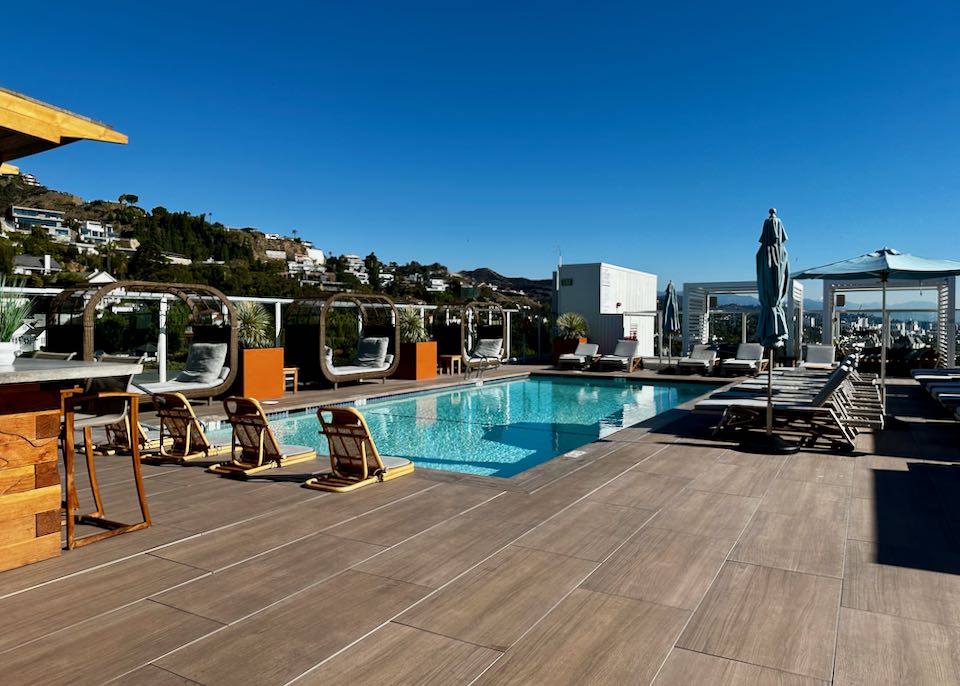
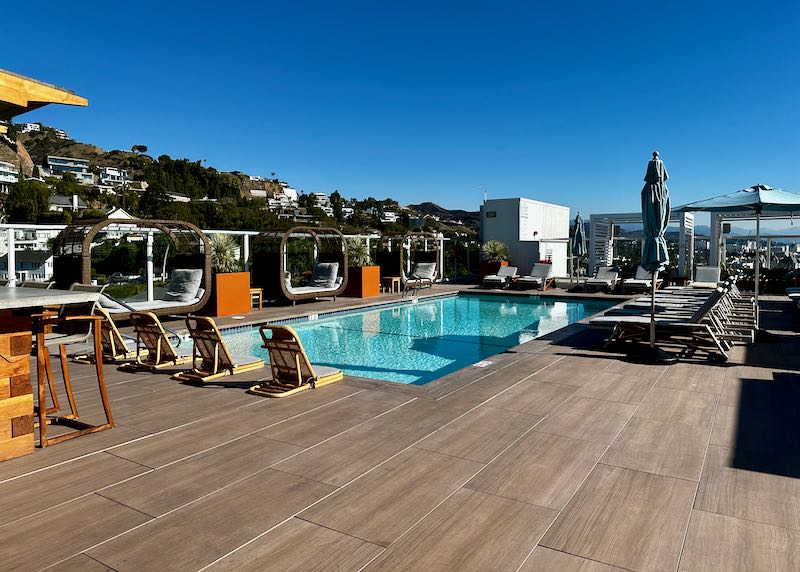
The trendy and friendly Andaz Hotel in West Hollywood.
2. West Hollywood
West Hollywood, often called WeHo, is a 1.9-square-mile city-within-a-city located between Beverly Hills and Hollywood. It is arguably the most walkable neighborhood in the entire Los Angeles region and is our top recommendation for visitors who want to experience the city’s best nightlife and dining without needing to drive.
The Sunset Strip
The legendary 1.5-mile stretch of Sunset Boulevard forms the northern edge of the city. The Strip is a mix of historic rock-and-roll heritage and massive new developments. While the long-term redevelopment of the Viper Room is still in the works (targeting a 2029 opening), the iconic club is open at 8850 Sunset. Other legendary venues like the Whisky a Go Go and the Roxy continue to host live music nightly.Nightlife and Culture
Santa Monica Boulevard is the heart of L.A.’s LGBTQ+ community, packed with dance clubs, rooftop bars, and shops. It is also home to the ONE National Gay & Lesbian Archives, the largest collection of its kind in the world. For architecture buffs, the MAK Center for Art and Architecture at the Schindler House is a masterpiece of modern design and a must-visit.Shopping Districts
The West Hollywood Design District is the place to find high-end galleries and furniture designers. To the south, Melrose Avenue is L.A.’s premier shopping corridor. The western end near San Vicente Boulevard features high-fashion flagships and the ivy-covered boutiques of Melrose Place, while the stretch closer to La Brea offers a grittier, indie-focused experience.Transport and Hotels
West Hollywood is not yet connected to the Metro rail system, but it is extremely transit-friendly. CitylineX offers a free shuttle to the Hollywood/Highland Metro station, and the WeHo PickUp provides free trolley service along Santa Monica Boulevard on weekends. A major addition to the skyline is the PUBLIC West Hollywood hotel on the Sunset Strip, featuring a massive 16,000-square-foot rooftop terrace with 360-degree views of the Los Angeles basin.Because of its central location, WeHo is an ideal base for those who want to be 20 minutes from everything – from the beaches in Santa Monica to the museums in Downtown L.A. – provided you time your travel around the peak traffic hours.
- Best Hotels: Andaz West Hollywood • Sunset Marquis Hotel • Kimpton La Peer Hotel • Petit Ermitage • Hotel 850 SVB • The Charlie
- Best Cheap/Midrange Hotel: Best Western Plus Sunset Plaza Hotel
- Best Hostel: Banana Bungalow – West Hollywood Hostel
3. Beverly Hills
Beverly Hills is synonymous with luxury, fame, and wealth, anchored by the iconic 90210 zip code and the high-fashion boutiques of Rodeo Drive. Most of the commercial action is concentrated in the Golden Triangle district – the area bordered by Santa Monica Boulevard, Wilshire Boulevard, and Canon Drive. North of this zone, the neighborhood transitions into lush, gated residential estates.
The biggest news for Beverly Hills is the arrival of the Metro D Line (formerly the Purple Line). The first section of the subway extension, connecting Downtown L.A. and Koreatown to the Wilshire/La Cienega station, is expected to open by Spring 2026. This provides a rail link to the edge of the neighborhood, though a car or rideshare is the most convenient way to explore the residential hills.
Key highlights for visitors:
- Rodeo Drive: Stroll the three blocks of ultra-luxury flagships. For a fashion-focused history, look for the Rodeo Drive Walk of Style plaques embedded in the sidewalk.
- Paley Center for Media: Note that the traditional museum building on North Beverly Drive has closed. The Paley Archive – a collection of 160,000 television and radio programs – is now accessible at the Beverly Hills Public Library on North Rexford Drive. The famous PaleyFest television festival now takes place at the Dolby Theatre in Hollywood (scheduled for April 4–12, 2026).
- Beverly Gardens Park: Home to the massive Beverly Hills monument sign and the historic Electric Fountain. It’s the city’s most popular photo op.
- Greystone Mansion & Gardens: A stunning 1920s estate often used in films. While the interior is mostly closed to the public, the formal gardens and grounds are free to explore and offer a quiet escape from the city.
- Free Trolley Service: The city operates a free weekend trolley that runs between the Civic Center and the Rodeo Drive area. If you are visiting in June, don’t miss the Rodeo Drive Concours d’Elegance (June 21, 2026), where rare and exotic cars line the street.
Dining in Beverly Hills is world-class. Landmarks like Spago and Maude are the top choices for fine dining, while the Polo Lounge at the Beverly Hills Hotel is the premier spot for celebrity-spotting over brunch.
- Best Hotels: Peninsula Beverly Hills • Beverly Hills Hotel • Beverly Wilshire • L’Ermitage • Waldorf Astoria • Four Seasons Hotel at Beverly Hills • The Maybourne
- Best Midrange Hotels: SIXTY • Sonder Beverly Terrace
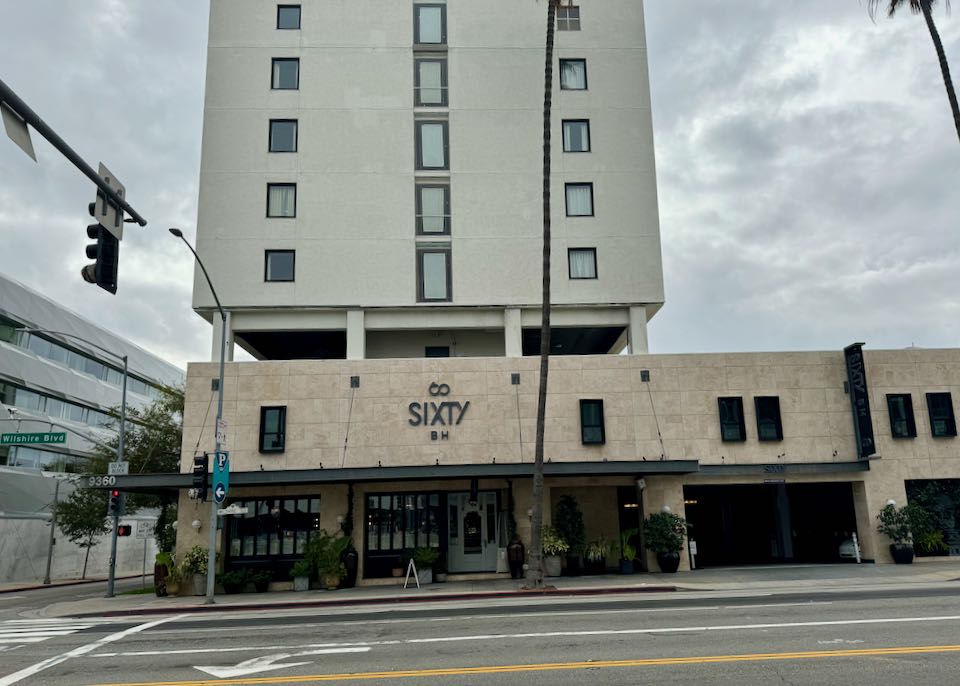
The SIXTY is a great midrange hotel on Wilshire Boulevard, just a five-minute walk from the trendy shops and restaurants on Rodeo Drive.
4. Downtown
Downtown Los Angeles (DTLA) is the historic and financial engine of the city, having transformed from a business-only district into a vibrant destination for food, art, and nightlife. For 2026, the neighborhood is more accessible than ever thanks to the completed Metro Regional Connector, which allows for transfer-free rail travel from Santa Monica to East L.A. and from Long Beach to Pasadena.
The Hub of Sports and Entertainment
The southwest edge of Downtown is anchored by the Crypto.com Arena and the L.A. LIVE complex. While it remains the home of the L.A. Lakers, L.A. Kings, and L.A. Sparks, note that as of 2024, theL.A. Clippers have move to their own dedicated arena, the Intuit Dome, in Inglewood. In 2026, Downtown will be a primary fan hub for the FIFA World Cup, with the nearby L.A. Convention Center hosting major international fan events throughout the summer.Arts and Architecture
The “forest of skyscrapers” is balanced by a massive concentration of world-class culture on Bunker Hill. Key updates include:
- The Broad & MOCA: These two heavyweights of contemporary art are now connected by the new Grand Avenue Arts/Bunker Hill Metro station, which features a 100-foot-deep elevator ride that drops you right at the museum’s doorstep.
- The Grand LA: Designed by Frank Gehry, this massive mixed-use complex across from the Walt Disney Concert Hall is now fully open. In 2026, it debuts DATALAND, the world’s first physical museum dedicated to AI Arts.
- Historic Core & Broadway: The Broadway Theatre District is home to the largest concentration of historic movie palaces in the U.S. Many are now repurposed as high-end retail (like the Apple Store in the Tower Theatre) or live performance venues.
Dining and Local Vibe
DTLA is the city’s undisputed capital for diverse dining. You can find everything from the 24/7 counter service at the Original Pantry Cafe (open since 1924) to the historic French Dips at Philippe the Original or Cole’s. Grand Central Market is the essential L.A. food experience, housing dozens of vendors ranging from legacy butchers to trendy neon-lit taco stalls. For the city’s most innovative cooking, head to the Arts District, where converted warehouses host powerhouses like Bestia and Bavel.Safety Note
While Downtown has boomed, it is a city of stark contrasts. The “Skid Row” area (centered around 5th and 6th Streets, east of Main) is home to a large unsheltered population and should be avoided on foot. Stick to the well-trafficked corridors of the Historic Core, Bunker Hill, and the Arts District, especially after dark.
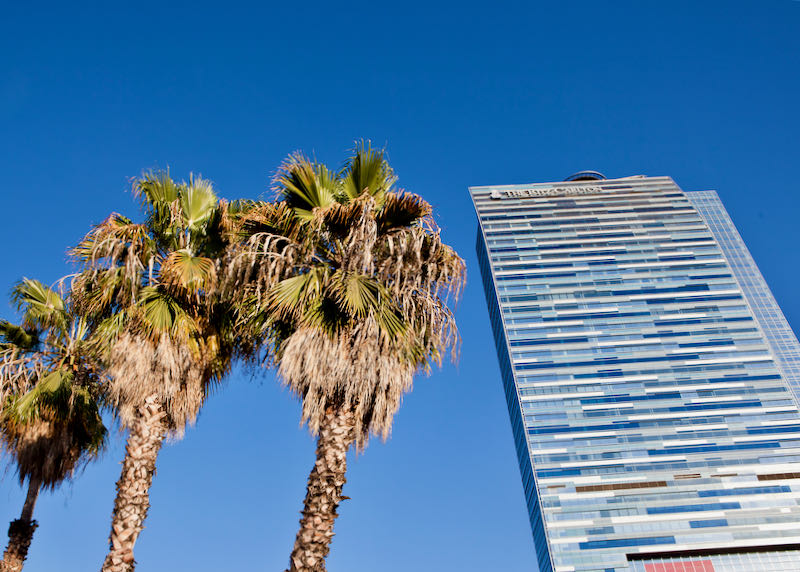
- Best Hotels: Ritz-Carlton Downtown • Hotel Per La • JW Marriott • InterContinental Downtown • Level Downtown South Olive
- Best Cheap/Midrange Hotels: Hotel Indigo • Freehand • The Hoxton • Ace Hotel
5. Venice Beach
Staying in Venice Beach is an immersive experience centered on the Pacific coastline. While the neighborhood features a few traditional sights, the primary draw is the 2.5-mile Venice Beach Boardwalk, the massive strip of sand, and the high-energy street culture. Venice is a vital part of the Route 66 Centennial celebrations, serving as the artistic neighbor to the highway’s terminus in Santa Monica.
The Boardwalk and Beach
The Venice Beach Boardwalk is best explored on foot to take in the street performers, artists, and specialized vendors. Key landmarks include the Skate Dance Plaza and the legendary Muscle Beach weight pen. The boardwalk concludes at the 1,300-foot Venice Pier, a quieter spot perfect for fishing or views of the coastline. Just steps from the pier is the Hinano Café, a local institution famous for its burgers and dive-bar atmosphere.Abbot Kinney and the Culinary Scene
Inland from the beach, Windward Avenue serves as the neighborhood’s gateway, marked by the iconic Venice Sign. This leads directly to Abbot Kinney Boulevard, often called one of the best shopping streets in the country. The street is anchored by major culinary hits like Felix Trattoria and Gjelina. A significant update for foodies is RVR, an izakaya-style restaurant from founding Gjelina chef Travis Lett, which has become a top destination in the neighborhood.Transportation and Accessibility
Venice is highly walkable, but a bicycle is the best way to move between beach towns. The 22-mile Marvin Braude Bike Trail provides a paved, scenic route directly to the Santa Monica Pier (approximately 2 miles north). For public transit, the Big Blue Bus (Route 1) runs frequently along Main Street, providing a cheap and efficient connection to the Santa Monica Expo Line station.Safety and Practicality
Venice can be unpredictable, particularly after dark. Travelers will notice increased multi-agency efforts to maintain public access and sanitation along the boardwalk and surrounding streets like Rose Avenue. However, it is still illegal to be on the beach or in the parks after dark, and standard city precautions apply. While Venice has excellent boutique stays like Hotel Erwin, visitors looking for full-service 5-star luxury typically head to neighboring Marina Del Rey for properties like the Ritz-Carlton.
- Best Hotels: Ritz-Carlton Marina del Rey • Hotel Erwin
- Best Cheap/Midrange Hotels: Inn at Venice Beach • Su Casa at Venice Beach
- Best Hostel: Samesun Venice Beach
6. Santa Monica
Santa Monica is the premier beach city in the Los Angeles region, offering a walkable environment that balances classic California coastal life with high-end shopping and a sophisticated dining scene. For 2026, the city is at the center of several major global milestones, making it one of the busiest and most exciting places to stay in Southern California.
The Pier and Beach Culture
The Santa Monica Pier is the city’s most iconic landmark and serves as the official western terminus of Route 66. In 2026, the highway celebrates its 100th Anniversary (Centennial), and the pier will host a year-long schedule of car meetups, live music, and commemorative events. For the 2026 FIFA World Cup in June and July, the pier transforms into a massive fan hub, featuring the Michelob ULTRA Pitchside Club with live match screenings and interactive soccer activations. Just south of the pier, you’ll find the historic “Original Muscle Beach” – an outdoor gymnastics area established in the 1930s that is still active today.Shopping and Downtown Vitality
Santa Monica’s downtown core is undergoing a significant “Renaissance”.
- Third Street Promenade: This pedestrian-only shopping strip is being revitalized with new nightlife venues and a “Digital Display District” featuring immersive art screens. A massive new Google Store has also anchored the district in the historic Keller Building.
- Santa Monica Place: An open-air luxury mall located at the end of the Promenade, perfect for high-end boutique shopping.
- Montana Avenue: For a more local, sophisticated vibe, head inland to Montana Avenue between 7th and 17th Streets. It’s home to over 150 upscale boutiques, cafes, and bookstores.
- Main Street: South of the pier, Main Street offers a more bohemian atmosphere with independent shops and the California Heritage Museum.
Arts and Surroundings
Just north of the city limits in the Pacific Palisades, you can visit the Getty Villa, which houses an incredible collection of Greek and Roman antiquities in a recreated ancient Roman country house. Other nearby highlights include the Eames House (a landmark of mid-century modern architecture) and Will Rogers State Historic Park for hiking and weekend polo matches.Transit and Practicality
Santa Monica is the terminus for the Metro E Line, providing a direct, traffic-free rail link to Downtown L.A. and Exposition Park. While the city is a fantastic base for beach lovers, its coastal location means that day trips to Hollywood or the San Fernando Valley can still be time-consuming during peak hours. If you are visiting in early 2026, note that the city hosts Frieze Los Angeles (Feb 26–March 1) at the Santa Monica Airport, which draws a massive international art crowd – book your accommodations early for these dates.Luxury Hotel Rebirth
The hotel landscape has shifted significantly. The former Loews has been fully reimagined as the Regent Santa Monica Beach, and the former Le Merigot is now the Sandbourne Santa Monica, adding two major luxury players to the beachfront alongside the legendary Shutters on the Beach.
- Best Hotels: Shutters on the Beach • Hotel Casa del Mar • Loews Santa Monica Beach Hotel • Fairmont Miramar • Oceana • Ambrose Hotel
- Best Cheap/Midrange Hotels: Palihouse Santa Monica
- Best Hostel: HI Los Angeles Santa Monica Hostel
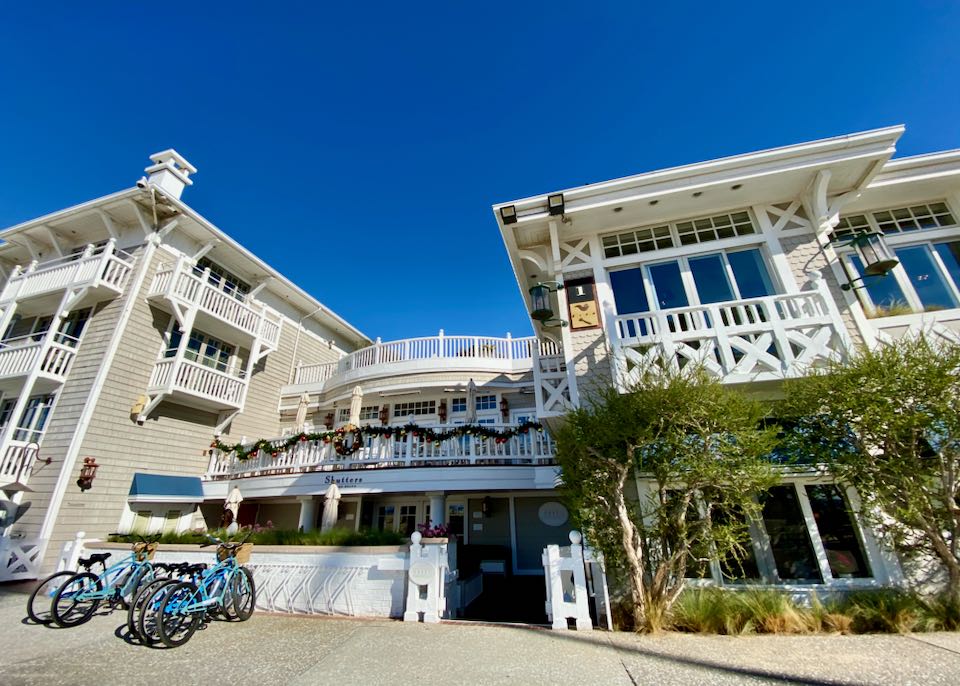
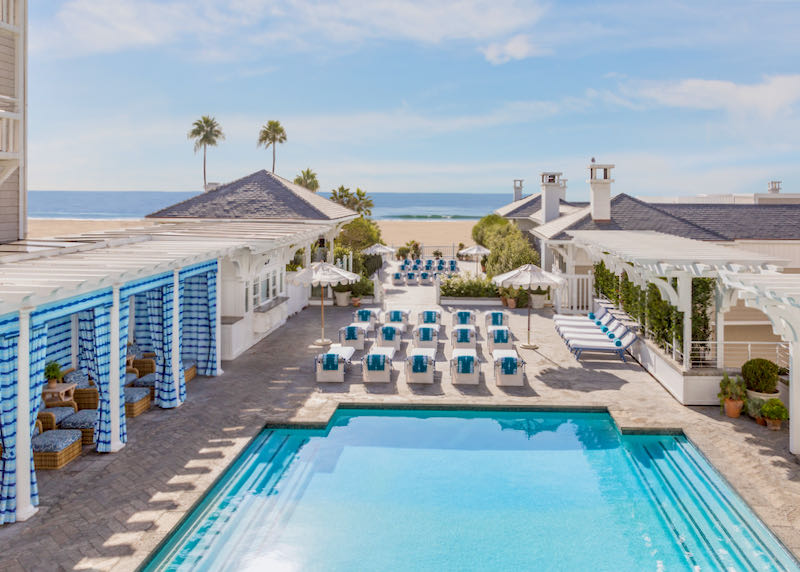
The fantastic Shutters on the Beach in Santa Monica.
7. Malibu
Malibu is the legendary 27-mile stretch of coastline west of Santa Monica, synonymous with celebrity estates, surf culture, and some of the most dramatic ocean views in California. Malibu is an essential day trip or high-end getaway, especially as it celebrates its connection to the Route 66 Centennial.
Beaches and Landmarks
Malibu is primarily defined by its world-class beaches. Zuma Beach is the best for families and sunbathing, while Leo Carrillo State Park offers tide pools and sea caves. Surfrider Beach, located next to the pier, is a protected World Surfing Reserve. The Malibu Pier is a must-visit, though for 2026, travelers should note that the far end of the pier (including the Surfshop and the Pier Café) is undergoing structural repairs. However, the main Malibu Farm Restaurant at the front of the pier is still open and busy.Hiking and the Hills
The Santa Monica Mountains offer incredible inland exploration. The M*A*S*H set at Malibu Creek State Park is a popular 4.7-mile round-trip hike that is a top draw for its cinematic history. In 2026, the park is hosting special “First Day Hikes” on January 1st and guided night hikes throughout the winter season. Other high-value trails include Solstice Canyon (for its ruins and waterfall) and Escondido Canyon Park, which features a spectacular multi-tiered waterfall after the winter rains.Culture and Dining
While in town, visit the Adamson House and Malibu Lagoon Museum to see some of the finest Spanish Revival architecture and tile work in the state. Major community events include the 25th Annual Chumash Day Powwow (March 28–29) and the iconic Malibu Chili Cook-Off (Labor Day weekend, September 4–7).Dining in Malibu ranges from ultra-luxe to roadside casual:
- Fine Dining: Nobu Malibu and Mastro’s Ocean Club are the premier spots for a high-end experience with ocean views. Reservations are essential weeks in advance.
- Iconic Views: Geoffrey’s Malibu and Duke’s Malibu offer classic “Queen’s Necklace” views of the coastline.
- Local Favorites: For a more laid-back vibe, try Malibu Seafood or Broad Street Oyster Company at the Malibu Country Mart. Neptune’s Net, at the far north end of town, is the legendary biker and surfer hangout for fresh seafood.
Practical Advice
Malibu is best viewed as an expensive beach holiday destination. There are very few hotels, and even the mid-range options are pricey. For a splurge, the Malibu Beach Inn on “Billionaire’s Beach” is the gold standard, while the Surfrider Hotel offers a more modern, boutique experience. Because it is isolated from the rest of L.A.’s transit system, you must have a car to visit. Traffic on the Pacific Coast Highway (PCH) can be brutal on summer weekends – leave early and plan to stay for the sunset to avoid the worst of the “inbound” traffic back to the city.
- Best Hotels: Malibu Beach Inn • Nobu Ryokan Malibu • Surfrider Hotel
- Best Cheap/Midrange Hotel: The M Malibu
8. Miracle Mile (Central LA)
The district known as Miracle Mile is centered along a section of Wilshire Boulevard between Fairfax and Highland avenues (also known as Mid-Wilshire). The name harks back to its Art Deco heyday in the 1930s when it experienced a massive property boom – the historic El Rey Theatre is a prime example of the era’s architecture.
Today, the neighborhood is the city’s cultural heart, anchored by the legendary “Museum Row.” This area is undergoing its most significant transformation in decades:
- LACMA (Los Angeles County Museum of Art): The massive $750 million transformation is nearing completion. The new David Geffen Galleries, designed by Pritzker Prize-winning architect Peter Zumthor, are scheduled to officially open in April 2026. This striking, horizontal glass-and-concrete building spans directly over Wilshire Boulevard.
- Academy Museum of Motion Pictures: Now the centerpiece of Museum Row, the museum has a blockbuster 2026 schedule. Key exhibitions include “Studio Ghibli’s PONYO” (opening Feb 14), a major “Marilyn Monroe: Hollywood Icon” retrospective (opening May 31), and “The Horror Show” (opening Sept 27), which explores the cultural impact of horror cinema.
- La Brea Tar Pits and Museum: This active Ice Age excavation site is in the midst of its own multi-year “reimagining.” While the museum is open, visitors can see progress on the new 1-kilometer looping pedestrian walkway and expanded “visible fossil labs” where paleontologists work in full view of the public.
- Petersen Automotive Museum: Easily recognized by its stainless-steel ribbon exterior, the Petersen is a must for car enthusiasts. In 2026, it features rotating exhibits on the future of electric flight and high-performance supercars.
- Craft Contemporary: Located directly across from LACMA, this smaller, intimate museum focuses on contemporary craft and design, offering a quiet and highly curated alternative to its larger neighbors.
Accommodation options within the Miracle Mile itself are limited. While there are a few boutique rentals and the nearby Short Stories Hotel (on Fairfax), most visitors find it more practical to stay in West Hollywood or Beverly Hills and commute in. The neighborhood is more accessible than ever; the first phase of the Metro D Line (Purple Line) extension is expected to begin service to the Wilshire/La Cienega station in early 2026, bringing high-speed rail to the western edge of the district.
- Best Hotel: Kimpton Hotel Wilshire
- Best Cheap/Midrange Hotel: Beverly Laurel Hotel
9. San Pedro
San Pedro is L.A.’s scrappy port district, and it is undergoing its most massive transformation in decades. Long overlooked by tourists, it is now becoming a major waterfront destination.
The West Harbor Transformation
The big news is the grand opening of West Harbor, a 42-acre waterfront district replacing the old Ports O’ Call Village. This modern development features a mile-long promenade, over-water dining decks, and an open-air amphitheater. Major dining additions include Yamashiro, King & Queen Cantina, Mike Hess Brewing, and L.A.’s largest outdoor pickleball complex. The legendary San Pedro Fish Market is currently operating at a temporary spot called “The Landing” (706 S Harbor Blvd) while it prepares its massive permanent home within West Harbor.National Museum of the Surface Navy
The historic Battleship USS Iowa Museum is evolving. In 2026, it officially debuts as the National Museum of the Surface Navy, the first of its kind in the U.S. It is a centerpiece of the L.A. Waterfront, especially during LA Fleet Week (scheduled for May 22–25, 2026), which brings active-duty ship tours and military flyovers to the harbor.Maritime and Coastal Attractions
Most of San Pedro’s top sights are concentrated along the water:
- Battleship USS Iowa: Now the home of the Surface Navy Museum.
- Los Angeles Maritime Museum: Located in the historic 1941 municipal ferry terminal.
- Cabrillo Marine Aquarium: A Frank Gehry-designed facility near the beach, perfect for families.
- Point Fermin Lighthouse & Park: L.A.’s southernmost point, offering dramatic cliff views and whale watching (winter/spring).
- Korean Bell of Friendship: A massive bronze bell in a traditional stone pavilion with panoramic views of the Pacific.
Getting Around
The free San Pedro Downtown Trolley (the “Red Car”) is the best way to move between the waterfront and the historic downtown. It typically runs on weekends from noon to 8:00 pm, looping between the Battleship Iowa, West Harbor, and the DoubleTree Hotel. While the trolley is helpful, San Pedro is still poorly connected to the rest of L.A. by rail; a car is essential if you plan to use this as your base for exploring the wider city.Where to Stay
Lodging is still catching up to the waterfront development. The Crowne Plaza Los Angeles Harbor is the most central choice for walking to the new West Harbor district, while the DoubleTree by Hilton San Pedro offers a more relaxed, marina-side experience. For most visitors, San Pedro is better suited as a dedicated day trip or a pre-cruise stay rather than a base for a week-long L.A. vacation.
- Best Hotel: DoubleTree by Hilton Hotel San Pedro
10. Long Beach
Long Beach is a legitimate destination city in its own right, located about 25 miles south of Downtown LA. It is a key hub for waterfront dining and major events, though it is a long commute if you plan to use it as a base for exploring the rest of L.A.
Top Attractions
The Queen Mary is the city’s crown jewel. This Art Deco liner is fully operational for tours, dining, and overnight stays. For 2026, the ship has a packed events calendar including the “Boots on the Boat” country nights and the massive “Dreamstate SoCal” festival (November 21–22, 2026). The Sunday Royal Brunch in the Grand Salon is one of the best high-end dining experiences in the region.The Aquarium of the Pacific is another must-visit, especially for families. Its “Pacific Visions” wing offers an immersive 4D cinema experience. Major cultural festivals for 2026 include the African American Festival (Feb 21–22) and the Pacific Islander Festival (June 6–7).
Other cultural highlights:
- MOLAA (Museum of Latin American Art): The only museum in the U.S. dedicated to modern and contemporary Latin American art. Don’t miss the “Interlaced Communities” exhibition featuring Indigenous Guatemalan artists (running through March 1, 2026).
- Long Beach Museum of Art: Set on a bluff overlooking the ocean, it’s worth visiting just for the view from the Claire’s at the Museum cafe.
- Catalina Express: Long Beach is the main departure point for high-speed ferries to Catalina Island. It’s an easy one-hour trip to Avalon.
Major Events
The Acura Grand Prix of Long Beach is scheduled for April 17–19, 2026. This is the biggest event of the year; the streets of Downtown are converted into a race track, and hotels book up months in advance. If you aren’t there for the racing, avoid these dates as traffic and noise are significant.Shopping and Dining
Downtown Long Beach and the Promenade are packed with breweries and independent eateries. Shoreline Village offers a more tourist-focused boardwalk experience with souvenir shops and harbor-view dining. For a high-end stay, the recently opened Fairmont Breakers Long Beach has revitalized a historic landmark, offering a sophisticated rooftop bar (HALO) with the best views of the harbor and the Queen Mary.Transit Tips
Long Beach is the southern terminus of the Metro A Line (formerly the Blue Line). Thanks to the Regional Connector, you can now ride from Downtown Long Beach through DTLA all the way to Pasadena without changing trains. While convenient and cheap ($1.75), the trip to Downtown LA takes about an hour. If you’re heading to SoFi Stadium or LAX, a car or rideshare is significantly faster.
- Best Hotels: Hyatt Regency Long Beach • Westin Long Beach Renaissance Long Beach
- Best Cheap/Midrange Hotels: Hotel Royal • Best Western Plus Hotel at the Convention Center
11. Pasadena
Historic Pasadena lies 12 miles north of Downtown L.A. and is one of the most character-rich bases for a Southern California stay. It is globally famous for the Rose Bowl Stadium and the annual Tournament of Roses.
For visitors, the primary appeal is Old Pasadena, a 22-block historic district filled with 19th-century brick buildings, upscale shopping, and a dense collection of restaurants and hidden alleyway cafes.
Key cultural highlights include:
- The Huntington Library, Art Museum, and Botanical Gardens: In 2026, the Huntington launches “THIS LAND IS…”, a multi-year initiative reflecting on the American story for the nation’s 250th anniversary. Visitors can explore the newly renovated American art galleries and site-specific installations by British artist Edmund de Waal in the Japanese and Chinese Gardens.
- Norton Simon Museum: Located on Colorado Boulevard, this world-class museum hosts one of the most remarkable private art collections in the world. Through early 2026, the museum is celebrating “50 Years at the Norton Simon Museum” with special retrospectives of its most significant acquisitions.
- Gamble House: A masterpiece of the American Arts and Crafts movement, this 1908 residence offers guided tours (Thursday–Sunday) that are essential for fans of architecture and woodworking.
- USC Pacific Asia Museum: Housed in a historic 1924 building modeled after a Chinese imperial palace, it is one of the few U.S. institutions dedicated solely to the arts of Asia and the Pacific Islands.
Transportation Updates
Pasadena is a primary hub for the Metro A Line (formerly the Gold Line). Thanks to the 2025 extension, the line now runs from Long Beach through Downtown L.A. and Pasadena all the way to Pomona. This makes Pasadena an excellent base for exploring the San Gabriel Valley.Note for travelers: Construction is beginning on the North Hollywood to Pasadena Bus Rapid Transit (BRT) line. This project will eventually provide high-speed, zero-emission bus service connecting Pasadena to Glendale, Burbank, and North Hollywood, though you should expect some minor utility work and lane shifts along the route throughout the year. While Pasadena is highly walkable and transit-linked to Downtown L.A., a car is still recommended if you plan to visit the beaches or the Westside.
- Best Hotels: Langham Huntingon Pasadena • Westin Pasadena
- Best Cheap/Midrange Hotel: Hyatt Place Pasadena • Bissell House Bed & Breakfast • Rose & Crown Hotel
12. Burbank & the Valley
Just 12 miles north of Downtown LA, Burbank marks the beginning of the San Fernando Valley, or “the Valley.” Home to major movie studios since the 1950s, it is best known for Warner Bros Studios tours and Universal Studios, which debuts the high-speed Fast & Furious: Hollywood Drift coaster in 2026. While the surrounding sprawl is mostly residential, Forest Lawn Memorial Park in Glendale features an exceptional art museum and the graves of icons like Michael Jackson and Elizabeth Taylor. Further north in Santa Clarita, Six Flags Magic Mountain opens the new Looney Tunes Land in 2026. Metro connects the Valley, but a car is much more convenient.
- Best Hotels: Coast Anabelle Hotel • Lexen Hotel – North Hollywood
- Best Cheap/Midrange Hotel: The Tangerine • El Royale Hotel • Hilton Garden Inn Burbank Downtown
13. Anaheim
Opening in 1955, Disneyland dominates Anaheim and is the primary reason for most visits. For 2026, the resort marks its 70th Anniversary (concluding August 9) with special parades and the debut of a new Mandalorian and Grogu mission on Millennium Falcon: Smugglers Run (May 22). Families with young children should note the new Bluey’s Best Day Ever show at Fantasyland Theatre. Nearby, Knott’s Berry Farm and Adventure City offer excellent family-friendly alternatives.
Downtown Anaheim has evolved into a legitimate culinary destination centered on the Anaheim Packing District. The Packing House food hall and the adjacent MAKE building – housing Unsung Brewing Company – are highlights. Getting around the downtown area is easy using the free FRAN (Free Rides Around the Neighborhood) micro-transit app. However, traveling between Anaheim and the rest of L.A. is still best done by car.
- Best Hotels: JW Marriott Anaheim Resort • Ayres Hotel Orange • Residence Inn at Anaheim Resort/Convention Center
- Best Cheap/Midrange Hotel: Wyndham Anaheim • Howard Johnson
More L.A. Neighborhoods
With more time, these neighborhoods are worth checking out:
- Koreatown: Located in Central L.A., this is one of the city’s most dynamic neighborhoods, famous for its 24-hour dining scene and hidden karaoke bars. It is heavily transit-linked via the D Line. Our top choice here is the historic Hotel Normandie, which perfectly captures the area’s 1920s character.
- Exposition Park: Home to a massive cluster of museums, including the Natural History Museum, California Science Center (housing the Space Shuttle Endeavour), and the California African American Museum. The big news is the grand opening of the Lucas Museum of Narrative Art, scheduled for September 22. It’s an easy visit from Downtown L.A. via the E Line, but we still don’t recommend staying in the immediate area.
- Westwood: This neighborhood surrounds the UCLA campus and is very walkable. The Hammer Museum is the main draw here, offering free admission and world-class contemporary art exhibitions. Palihotel Westwood Village is the best boutique option for those who want to be near the university, though it is less central for wider L.A. sightseeing.
- Bel-Air: One of L.A.’s most exclusive residential enclaves. There are no traditional sights or shops here, but it is the home of the legendary Hotel Bel-Air, tucked away in a private canyon. Use a car to drive nearby Mulholland Drive for some of the best views of the San Fernando Valley and the L.A. Basin.
- Brentwood & The Getty: The Getty Center is a premier L.A. attraction, known for its architecture, gardens, and European art collection. Admission is free, but timed-entry reservations are required. While the Luxe Sunset Boulevard Hotel is a solid nearby option, the Getty is easily reached via the 405 freeway or local buses from the Westside.
The 22 Best Hotels in Los Angeles
1. The Maybourne
Hotel Phone: (310) 860-7800
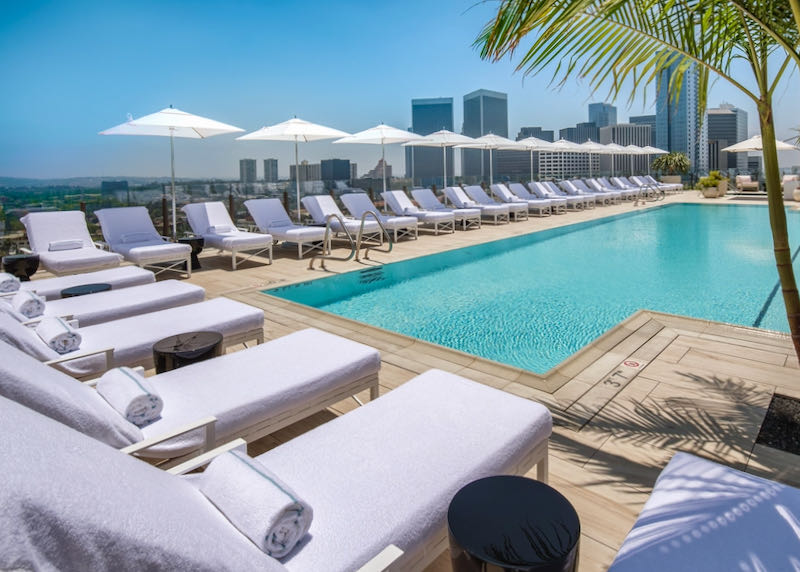
The Maybourne is the perfect mix of high-end luxury and laid-back cool, ideal for enjoying the Beverly Hills vibes. Rooms are stylish and comfy, making for a perfect chill-out spot after a day of exploring or shopping (Rodeo Drive is two-minutes away on foot). The California and Hollywood suites are fantastic. The rooftop pool is a highlight and food-wise, try The Terrace for top-notch Californian eats with both indoor and outdoor seating.2. Beverly Wilshire (A Four Seasons Hotel)
Hotel Phone: 310-275-5200
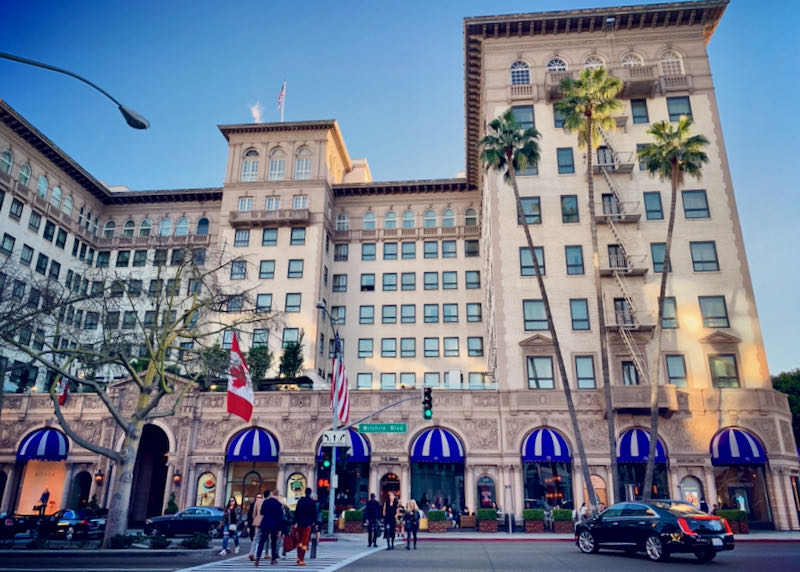
Excellent five-star hotel with a Michelin-starred steakhouse, Mediterranean-style outdoor pool, and sumptuous organic spa. This historic 1928 hotel retains Old Hollywood glamour in its spacious rooms and suites, which include amenities like marble bathrooms, Frederick Malle or Bulgari toiletries, and complimentary overnight shoeshine. Located directly across from Rodeo Drive, the epicenter of LA luxury shopping.3. Hotel Bel-Air
Hotel Phone: 310-472-1211
1950’s hotel tucked into the Bel-Air hills within a large, beautiful garden. Rooms are styled in a pleasing blend of Art Deco and modern, and guests can enjoy the charming outdoor pool, Wolfgang Puck restaurant, fireplace lounge, and full-service on-site spa.4. Beverly Hills Hotel
Hotel Phone: 310-276-2251
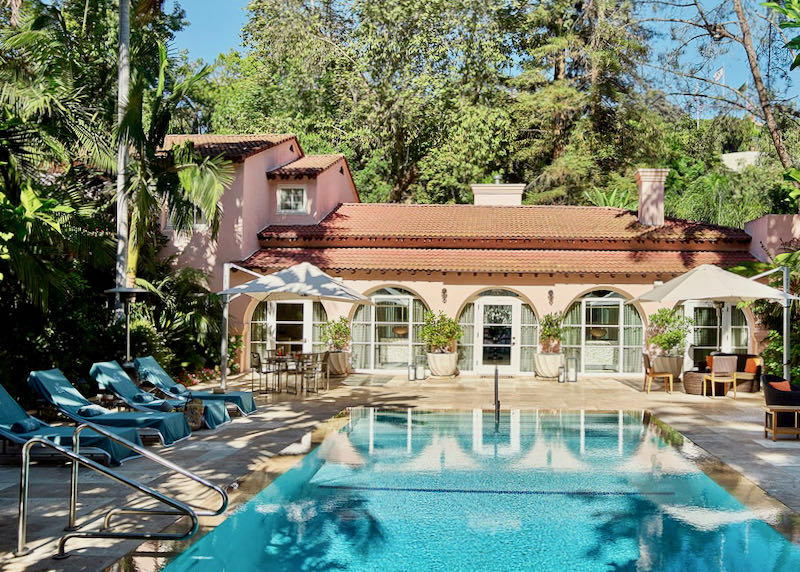
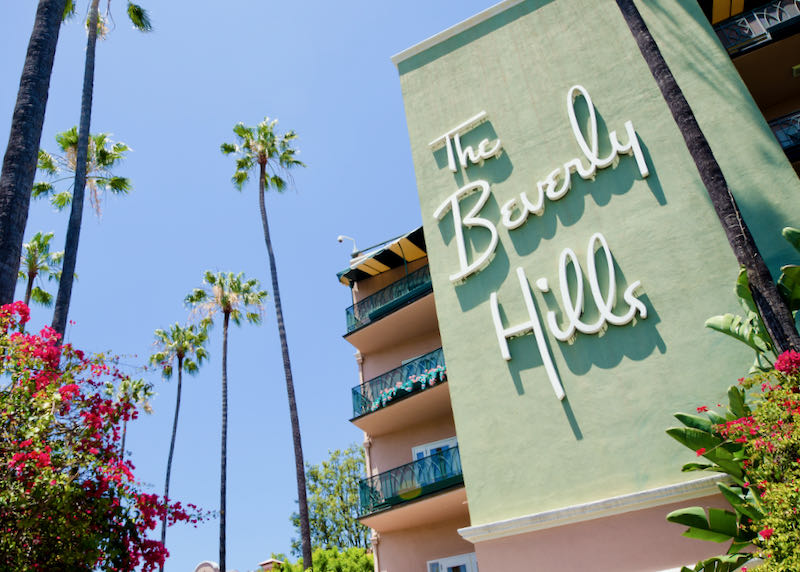
Iconic and palatial five-star with full-service spa. Decor is a fun and tasteful homage to 1950’s Hollywood glamour; rooms range from comfortable Superior Rooms for two to spacious and private luxury bungalows – all set within 12 acres of exotic tropical gardens. The city’s first hotel (and historic landmark) is legendary among the celebrity elite – and its pool and Polo Lounge restaurant regularly host the who’s who of Hollywood to this day.5. Ritz-Carlton Downtown
Hotel Phone: 213-743-8800
Modern luxury high-rise hotel in the heart of downtown LA. There are multiple great on-site dining and bar options, a heated rooftop pool and hot-tub with panoramic views over the city and mountains, and the largest spa in downtown Los Angeles. Located steps from Crypto.com Arena, Microsoft Theater, and the Grammy Museum; walkable to the downtown fashion and theater districts.6. Hotel Casa del Mar (Santa Monica)
Hotel Phone: 310-581-5533
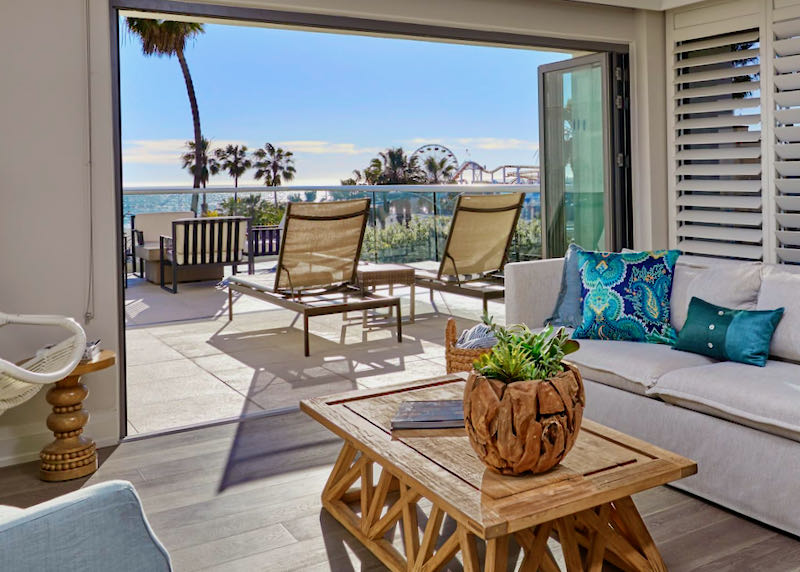
Charming and elegant beachfront hotel in the style of a Mediterranean villa. All rooms have floor-to-ceiling windows and hydrotherapy tubs, many have ocean views or private terraces. Guests can choose from three elegant dining options, lounge and swim at the tidy outdoor pool, and have use of the hotel’s fitness center and wellness spa. Great location near Santa Monica Pier.7. Andaz (West Hollywood)
Hotel Phone: 323-656-1234
Fantastic hotel with a great central location and easy access to shopping, restaurants, and nightlife. Rooftop pool is a gem (purportedly the highest rooftop pool in LA). Good restaurant and poolside snacks.8. Shutters on the Beach (Santa Monica)
Hotel Phone: 310-458-0030
Plush, five-star escape in Santa Monica. Panoramic ocean-view fine dining, wonderful spa and fitness center, and a beachfront pool and hot tub with private cabanas are all part of the package – all with an upscale beachy, breezy vibe. Located on a great stretch of beach, a five-minute walk from the Santa Monica Pier.9. Hotel Erwin (Venice Beach)
Hotel Phone: 310-452-1111
Great modern and moderately-priced hotel with a young, California-hip vibe. A two-minute walk from the Venice Beach Boardwalk, rooms at Hotel Erwin come with iPhone docking stations and mini-fridges; some suites have fun extras like foosball tables and private balconies. There’s a great pizza restaurant and bike rental on site, and the only rooftop bar in Venice Beach.10. Kimpton La Peer Hotel
Hotel Phone: 213-296-3038
Chic, design-centric boutique hotel in West Hollywood. Elegant modern decor features in the hotel’s impressive lobby, indoor/outdoor trattoria, and guest rooms and suites. There’s a heated outdoor pool, 24-hour fitness center, and nice perks like complimentary bike loan and wine hour for guests.11. Kimpton Everly Hotel
Hotel Phone: 213-279-3532
Smart Hollywood boutique hotel, less than a mile from the Walk of Fame. The heated rooftop pool is open year-round, served by an adjacent lounge bar; inside there’s a casual restaurant and cozy lounge. Great perks like free bicycle rental and complimentary evening wine hour for guests.12. Plaza La Reina
Hotel Phone: 310-986-6888
All-suite boutique hotel near Westwood Village shopping center and UCLA. Each unit has hardwood floors, a fully-equipped kitchen or kitchenette, washer and dryer, marble bathrooms, and stylish classic furnishing. The Live-Work suite features a dedicated office loft.13. Sunset Marquis Hotel
Hotel Phone: 310-657-1333
Classy resort hotel tucked into the heart of West Hollywood. Beautiful outdoor dining, two outdoor pools, fitness center, and spa are all on-site amid lovely manicured gardens. Accommodation includes guest rooms, suites, and spacious one or two-bedroom villas.14. Dream Hollywood
Hotel Phone: 323-844-6417
Stylishly modern accommodations in the heart of Hollywood. Their chic rooftop pool deck features private cabanas and views of the iconic Hollywood sign, and guests can choose from three fantastic on-site restaurants: an Asian bistro, rooftop grill, and fusion fine dining. Rooms feature 55″ Smart TVs and bedside iPads; some have private balconies and/or floor-to-ceiling windows that look out toward the Hollywood Hills. The Guesthouse is an impressive 1,750 square feet, with a black marble soaking tub, terrace, and panoramic views over the city.15. Hollywood Roosevelt
Hotel Phone: 323-856-1970
Set right on the Hollywood Walk of Fame and across the street from the TCL Chinese Theatre, The Hollywood Roosevelt splits the difference between vintage and modern. Guest rooms are spacious and contemporary; common spaces – from the elegant lobby and library to the hotel’s own game room with bowling alley – harken back to Hollywood’s glamorous golden age. An Italian steakhouse, swanky cocktail lounge, and upscale burger joint feature for on-site indoor dining. The Olympic-sized pool (featuring an iconic David Hockney mural) is adjacent to a lush outdoor cafe.16. Viceroy L’Ermitage
Hotel Phone: 310-278-3344
Swanky five-star Beverly Hills gem, set in a quieter, residential neighborhood less than a mile from luxury Rodeo Drive shopping. Viceroy L’Ermitage features a rooftop pool, wellness spa and fitness center (with Peloton bikes), and an award-wining French bistro. Guest suites are spacious and contemporary, with luxury amenities, and sleep up to five.17. Waldorf Astoria
Hotel Phone: 310-860-6666
Plush Beverly Hills retreat with panoramic-view rooftop bar and pool deck. Guest rooms and suites are spacious and stylish, all with floor-to-ceiling windows and private balconies. Among the hotel’s five dining options are two spots helmed by renowned French chef Jean-Georges Vongerichten. An award-winning day spa, 1,000 square foot fitness center, and celebrity stylist salon round out the Waldorf’s excellent amenities.18. Hotel Per La
Hotel Phone: 213-358-0000
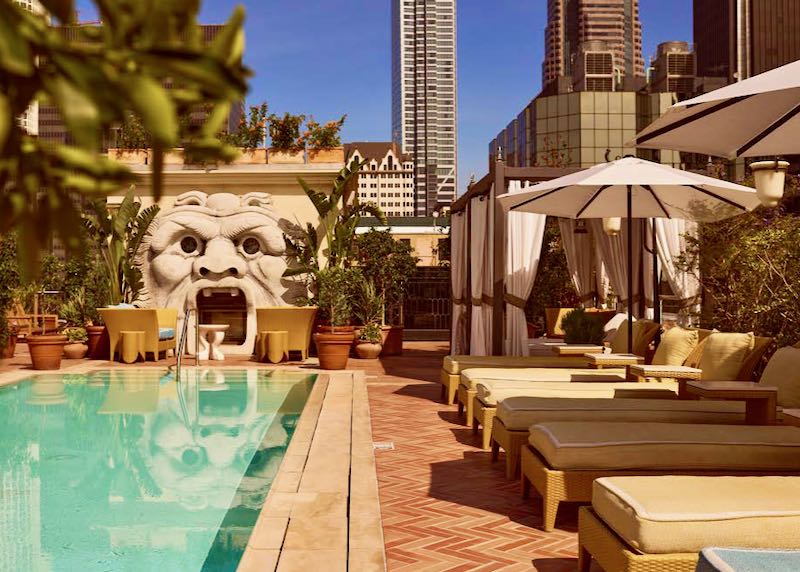
Recently opened and tastefully glamorous boutique hotel in downtown LA, set within a beautiful historic building. Design is rich, colorful, and eclectic; guest rooms are distinctly-styled, with luxe amenities like Terrazzo-floor showers and pedestal tubs. Its gorgeous restaurant and handsome bar feature are destinations, while the lushly-landscaped rooftop pool deck offers sweeping city views.19. JW Marriott L.A. LIVE
Hotel Phone: 213-765-8600
Modern luxury hotel downtown, well-situated near Crypto.com Arena, L.A. LIVE entertainment complex, and the Convention Center. Six in-house restaurants and bars (along with 24/7 room service), 24-hour fitness center, Ritz-Carlton Spa, and heated rooftop pool.20. Loews Santa Monica Beach Hotel
Hotel Phone: 310-458-6700
Great family-friendly hotel, only one block from the beach and Santa Monica Pier. All guest rooms are contemporary in style and feature balconies; some rooms and suites add cozy outdoor fire pits. Guests are served by two in-house dining options, and the award-winning pool deck overlooks the Pacific Ocean. On-site bicycle and rollerblade rentals, too.21. Fairmont Miramar Hotel
Hotel Phone: 310-576-7777
Well-appointed high-rise hotel with semi-private attached bungalows near Santa Monica Beach. All guest rooms and suites have smart and stylish contemporary decor; some add balconies and/or ocean views. Bungalows are in a garden-like setting by the pool. A restaurant, cocktail bar, and coffee shop are all located on the premises, along with a fitness center, barber shop, and spa. Three minutes’ drive from Santa Monica Beach.22. Malibu Beach Inn
Hotel Phone: 800-462-5428
Luxury accommodation on a private beach located 30 miles west of LA. All 47 guest rooms and suites face the ocean, with fantastic views to the Pacific and the Malibu Pier. Carbon Beach Club offers fresh-caught seafood and locally-sourced meat and produce, and the fantastic on-site day spa offers skin and body treatments – as well as daily morning yoga classes on the beach.