Seattle Travel Guide › Seattle Itinerary
Updated: July 13, 2026 • by Seattle Dave
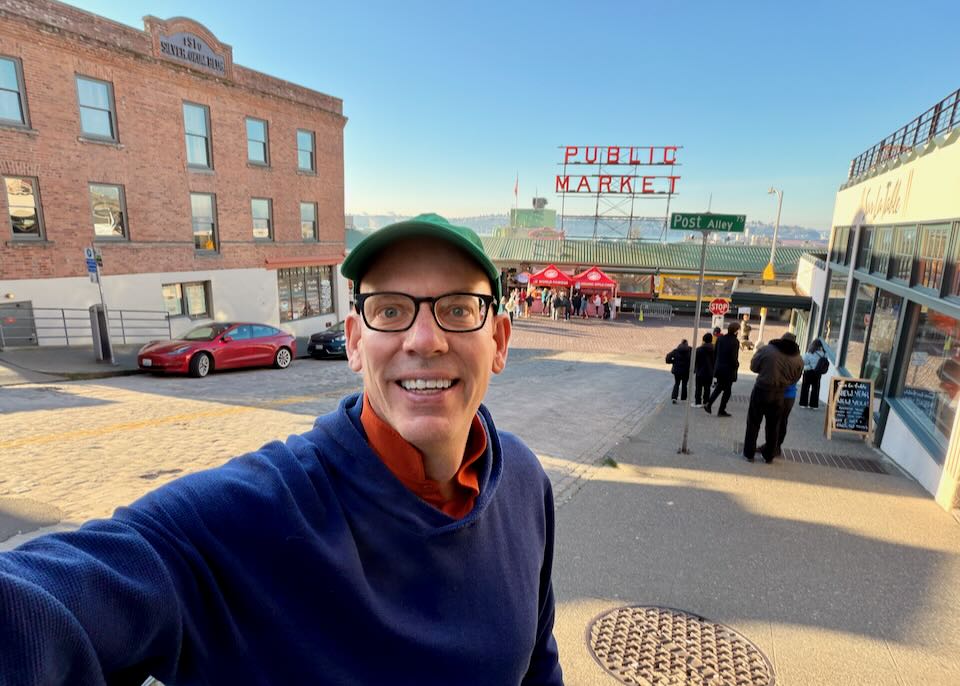
Seattle is a great city for a 1-, 2-, or 3-day visit, but only if you organize the trip geographically. It becomes frustrating when you zigzag across town, underestimate the hills, or assume everything labeled “Downtown Seattle” is equally convenient.
For most first-time visitors, I would build the trip around Pike Place Market, the Waterfront, Seattle Center, a ferry ride, and one neighborhood outside the downtown visitor core. That means Pike Place and the Waterfront on Day 1, Seattle Center and Lake Union on Day 2, then Ballard, Fremont, Capitol Hill, or a longer ferry outing on Day 3.
The goal is not to check off every Seattle attraction. Leave time to walk, eat, watch ferries, look at the mountains when they appear, and change plans when the weather changes. Seattle is much better when the itinerary has some space in it.
Seattle Itinerary: Quick Planning Guide
- One day in Seattle: Pike Place Market, the Waterfront, Seattle Center, and dinner in Belltown or Capitol Hill.
- Two days in Seattle: Add a Bainbridge Island ferry ride, Lake Union, and one neighborhood evening.
- Three days in Seattle: Add Ballard, Fremont, the Ballard Locks, and Golden Gardens or Gas Works Park.
- Best place to stay: Pike Place Market is the most efficient base for a first visit.
- Best place for views: The Waterfront or Pike Place, though Waterfront hotels require more uphill walking.
- Best place for families: Seattle Center for museums and open space; Pike Place for the most convenient all-around location.
- Best place before a cruise: Belltown or the Waterfront for Pier 66; Pike Place, Downtown, Belltown, or Seattle Center plus a taxi for Pier 91.
- Best no-car strategy: Stay central, walk within neighborhoods, use the Monorail for Seattle Center, Link Light Rail for the airport and Capitol Hill, ferries for sightseeing, and taxis for Ballard, Fremont, Kerry Park, and cruise terminals.
See also: Where to Stay in Seattle, Best Hotels in Seattle, and Seattle Without a Car.
How Many Days Do You Need in Seattle?
One full day is enough to see the highlights, but the route needs to stay tight. I would focus on Pike Place Market, the Waterfront, Seattle Center, and one good dinner.
Two full days is enough for a satisfying first visit. You can add a Bainbridge Island ferry ride, spend more time at Seattle Center, and have an evening in Capitol Hill, Belltown, or Ballard.
Three full days is ideal for most first-time visitors. The third day lets you leave the downtown sightseeing loop and see Ballard, Fremont, Lake Union, or another neighborhood without rushing.
With four or more days, consider adding a day trip. My guide to the best short trips from Seattle covers Bainbridge Island, Snoqualmie Falls, Woodinville, Mount Rainier, Whidbey Island, and other options.
How to Plan Seattle Efficiently
Seattle looks compact on a map, but water, hills, bridges, one-way streets, and uneven transit connections make some cross-town trips slower than expected. The biggest itinerary mistake is trying to visit Pike Place Market, Pioneer Square, Seattle Center, Capitol Hill, Ballard, Fremont, and a ferry in one day. It is technically possible but not a good way to experience the city.
Use these basic rules:
- Visit Pike Place in the morning. It is calmer, easier to navigate, and better for breakfast before the heaviest crowds arrive.
- Pair Pike Place with the Waterfront. They are next to each other, though there is a substantial elevation change between them.
- Group Seattle Center with Lower Queen Anne, Belltown, or Lake Union. All work naturally on the same day.
- Group Ballard and Fremont. They are north of Downtown and make sense as a half-day or full-day route.
- Visit Capitol Hill in the late afternoon or evening. It is at its best when restaurants, bars, coffee shops, bookstores, and the Pike/Pine area are active.
- Use the ferry as an attraction. The Bainbridge crossing takes about 35 minutes each way and provides some of the best skyline and water views in Seattle.
- Use taxis when they save a difficult transfer. This is especially worthwhile for Ballard, Fremont, Kerry Park, Pier 91, late dinners, and rainy evenings.
- Do not rent a car for a short city visit. Downtown parking is expensive, and a car is unnecessary for the itinerary below.
Where to Stay for a Seattle Itinerary
My wife and I hanging out in Seattle.
Where you stay changes how much you can comfortably do. A hotel described as “downtown” might be perfectly located, several steep blocks from the Waterfront, surrounded by office buildings, or on a street that feels uncomfortable late at night.
Pike Place Market: Best Overall
This is where I would stay for most first-time visits. You can walk to Pike Place Market, the Waterfront, ferries, Belltown restaurants, Downtown shopping, and the Monorail at Westlake Center. It is the most efficient base for a 1- or 2-day trip and still works very well for three days.
Best for: first-time visitors, couples, food-focused trips, short stays, car-free travelers, and travelers who want to return to the hotel during the day.
Tradeoff: hotel rates can be high, and some rooms get street or Market noise.
See: Best Pike Place Market Hotels.
Waterfront: Best for Views and Ferries
The Waterfront gives you Elliott Bay views, ferry traffic, the Seattle Aquarium, Waterfront Park, and quick access to Colman Dock. It is a good choice for a slower trip built around water and views.
Best for: ferry trips, the Aquarium, families, waterfront walks, views, and some Pier 66 cruise stays.
Tradeoff: Pike Place and Downtown are close but uphill. This matters with strollers, luggage, bad knees, or tired children.
See: Best Seattle Waterfront Hotels.
Belltown: Best Between Pike Place and Seattle Center
Belltown sits between Pike Place Market and Seattle Center, making it one of the most practical bases for a short trip. It also has many restaurants, bars, and late-night options.
Best for: couples, nightlife, restaurants, Pier 66 cruises, and travelers who want to walk to both Pike Place and Seattle Center.
Tradeoff: the exact block matters. Some streets feel lively and convenient; others feel rougher late at night.
See: Best Belltown Hotels.
Seattle Center and Lower Queen Anne: Best for Families
This is a strong base if the Space Needle, Chihuly Garden and Glass, Museum of Pop Culture, Pacific Science Center, Climate Pledge Arena, playgrounds, and the International Fountain are central to your visit.
Best for: families, Seattle Center attractions, concerts, sports events, and travelers who prefer a calmer setting than Downtown.
Tradeoff: you will use the Monorail, taxis, or longer walks for Pike Place and the Waterfront.
See: Best Seattle Center Hotels.
Capitol Hill: Best for Restaurants and Nightlife
Capitol Hill is one of Seattle’s best neighborhoods for restaurants, bars, coffee, bookstores, parks, and street life. It gives you more neighborhood atmosphere than a Downtown hotel.
Best for: food-focused trips, nightlife, younger travelers, repeat visitors, and travelers comfortable using Link Light Rail.
Tradeoff: it is less convenient for the Waterfront and Seattle Center. It is also uphill from Downtown.
See: Best Capitol Hill Hotels.
Ballard: Best for a Slower Neighborhood Stay
Ballard is where I live, and it is one of Seattle’s best neighborhoods for restaurants, breweries, coffee, shops, the Sunday farmers market, the Ballard Locks, and Golden Gardens. It is not where I would stay for a one-day first visit, but it can be an excellent base for a slower three-day trip.
Best for: repeat visitors, families with a car, neighborhood-focused trips, breweries, restaurants, and travelers who want a less touristy experience.
Tradeoff: Downtown is not close. Plan on buses, taxis, or rideshares rather than making several casual trips back and forth.
See: Best Ballard Hotels.
My wife and I at a Mariners game.
Best 1-Day Seattle Itinerary
This is the route I recommend for a first-time visitor with one full day. It works best from a hotel near Pike Place, the Waterfront, Downtown, Belltown, or Seattle Center.
8:00 to 10:30: Pike Place Market
Start at Pike Place Market before the heaviest crowds arrive. The Market is not a single fish-throwing corner. It is a multilevel food district filled with produce stands, flowers, seafood, bakeries, cheese shops, lunch counters, small businesses, and several easy-to-miss lower floors.
A good morning route:
- Enter near Pike Street and the main Market sign.
- Walk through the main arcade before it becomes crowded.
- Get breakfast, coffee, pastries, or fruit inside the Market.
- Explore at least one of the lower levels.
- Walk through the MarketFront for Elliott Bay and Olympic Mountain views.
Do not schedule every minute. Pike Place is best when you wander, snack, and follow whatever looks interesting. The original Starbucks, sort of, is easy to see from outside, but I would not spend a large part of a short visit waiting in line for it. There are better uses of your morning and many good places for coffee nearby.
10:30 to 12:30: Seattle Waterfront
Walk down from Pike Place toward the Seattle Waterfront. The walk downhill is easy. Remember that you will eventually need to come back up, continue south to a light rail station, or take a taxi.
On the Waterfront, choose one main activity:
- Seattle Aquarium: best with kids or during steady rain. Admission includes the Aquarium’s pier buildings and Ocean Pavilion.
- Waterfront Park: best for a free walk, views, playground time, and watching ferries.
- Seattle Great Wheel: an easy tourist attraction with good views in clear weather.
- Colman Dock: worth seeing for ferry activity even when you are not taking a ferry.
With only one day, I would treat the Waterfront as a walk rather than spending several hours there, unless the Aquarium is a priority.
12:30 to 1:30: Lunch Near Pike Place or Belltown
Do not cross the city for lunch. Eat along the route.
- Pike Place Market: best for chowder, seafood, pastries, sandwiches, and a casual lunch assembled from several stops.
- Belltown: best for a proper sit-down meal before continuing toward Seattle Center.
- Waterfront: best for views, though I would choose carefully. Some restaurants rely more on location than food.
Pike Place is easier for lunch before noon or after the main lunch rush. On busy summer weekends, popular counters can develop long lines.
2:00 to 5:00: Seattle Center
Take the Seattle Center Monorail from Westlake Center. The ride is only a few minutes, trains come every 8 to 10 minutes, and it is more fun and efficient than walking from central Downtown.
Choose one major attraction:
- Space Needle: best for a clear-weather first visit.
- Chihuly Garden and Glass: visually impressive, compact, and good in almost any weather.
- Museum of Pop Culture: best for music, film, science fiction, and pop culture.
- Pacific Science Center: best for families with younger children (fun but dated).
Do not try to rush through all four. Pick one major paid attraction, then leave time for the International Fountain, playgrounds, public art, and the Seattle Center grounds.
Evening: Belltown, Capitol Hill, or Kerry Park
I would finish the day in one of three ways:
- Belltown: the easiest choice, especially if you are staying near Pike Place or Downtown.
- Capitol Hill: the best choice for restaurants, bars, coffee, and a more local-feeling evening.
- Kerry Park: worth adding before dinner when the sky is clear. Take a taxi or rideshare rather than treating it as a casual Downtown walk.
Kerry Park is a viewpoint, not an evening destination. Allow 15 to 30 minutes, take the skyline photo, then continue to dinner.
What to Leave Out With One Day
With only one day, I would skip Ballard, Fremont, Lake Union, and a long Bainbridge visit. A ferry can replace Seattle Center if water and skyline views matter more to you than museums and the Space Needle, but trying to do both makes the day rushed.
Best 2-Day Seattle Itinerary
With two days, you can see the major attractions at a comfortable pace and add one of Seattle’s best experiences: a walk-on ferry ride.
Day 1: Pike Place, Waterfront, and Bainbridge Ferry
- Morning: Pike Place Market, breakfast, MarketFront, and food browsing.
- Late morning: Walk down to the Waterfront.
- Midday: Walk onto the Bainbridge Island ferry at Colman Dock.
- Afternoon: Walk into Winslow for lunch, coffee, shops, or a short waterfront wander.
- Evening: Return to Seattle for dinner in Pike Place, Belltown, or Capitol Hill.
The Bainbridge Island ferry is the easiest ferry outing for most visitors. The crossing takes about 35 minutes each way, and Downtown Winslow is a short walk from the terminal. You do not need a car. Allow roughly three to five hours for the complete outing, depending on the ferry schedule and how long you spend on the island. Check the sailing schedule before leaving your hotel, especially if you have a dinner reservation. Walk-on passengers rarely face the capacity problems that affect cars, but ferries can run late or operate on reduced schedules. Arrive before boarding closes rather than walking onto the dock at the exact departure time.
Day 2: Seattle Center, Lake Union, and Capitol Hill
- Morning: Monorail to Seattle Center.
- Late morning: Space Needle, Chihuly, MoPOP, or Pacific Science Center.
- Lunch: Lower Queen Anne, Belltown, or South Lake Union.
- Afternoon: Lake Union, MOHAI, or the Center for Wooden Boats.
- Evening: Capitol Hill for dinner, drinks, coffee, and bookstores.
South Lake Union is not my favorite Seattle neighborhood for atmosphere, but Lake Union itself is worth seeing. Floatplanes, houseboats, rowing shells, sailboats, working docks, and skyline views give you a different perspective on the city. The Museum of History & Industry, called MOHAI, is a good choice for travelers genuinely interested in Seattle’s history. It is also a useful rainy-day attraction.
Capitol Hill works better as an evening than a rushed daytime sightseeing stop. Have dinner, walk the Pike/Pine area, browse Elliott Bay Book Company, or continue north toward Volunteer Park if daylight and energy allow. Use Link Light Rail between Capitol Hill and Downtown when it fits your hotel. Take a taxi if you are tired, traveling as a group, or returning late.
Best 3-Day Seattle Itinerary
Three days gives you enough time to see classic Seattle and spend a full day outside the Downtown visitor core.
Day 1: Pike Place, Waterfront, and Downtown
- Morning: Pike Place Market before the largest crowds.
- Late morning: MarketFront and the Waterfront.
- Lunch: Pike Place or Belltown.
- Afternoon: Seattle Aquarium, Waterfront Park, Pioneer Square, or Smith Tower.
- Evening: Dinner in Belltown or Capitol Hill.
Pioneer Square is worthwhile for older architecture, galleries, Seattle history, sports bars, and the Underground Tour. It is also uneven block by block and not where I would send every visitor for an aimless late-night walk. I prefer Pioneer Square as a daytime addition, especially when paired with Smith Tower, the Klondike Gold Rush museum, or a specific restaurant.
Day 2: Bainbridge Ferry and Seattle Center
- Morning: Walk or taxi to Colman Dock.
- Late morning: Bainbridge Island ferry.
- Midday: Lunch and a walk around Winslow.
- Afternoon: Return to Seattle and take a hotel break.
- Late afternoon: Monorail to Seattle Center for the Space Needle or Chihuly.
- Evening: Dinner in Lower Queen Anne, Belltown, or Uptown.
This day works best when you do not overstay on Bainbridge. The ferry, a walk through Winslow, and lunch make an excellent half-day. Exploring farther across the island requires a car, bus planning, or more time. Use the forecast to choose your viewing time. On a clear day, prioritize the ferry, Space Needle, Kerry Park, Gas Works Park, or Golden Gardens. When clouds are low, spend more time at Chihuly, MoPOP, the Aquarium, MOHAI, restaurants, and neighborhoods.
Day 3: Fremont, Ballard Locks, and Ballard
- Morning: Fremont for coffee, shops, the Fremont Troll, and the Ship Canal.
- Late morning: Taxi, bus, bike, or continue toward the Ballard Locks.
- Midday: Ballard Locks, fish ladder, and gardens.
- Lunch: Ballard Avenue or the surrounding Ballard restaurant district.
- Afternoon: Ballard shops, breweries, National Nordic Museum, or Golden Gardens.
- Evening: Dinner in Ballard, then taxi or rideshare back to your hotel.
The Ballard Locks are one of Seattle’s most underrated attractions. Boats move between the fresh water of the Ship Canal and the salt water of Puget Sound, while the fish ladder provides a look at migrating salmon during the right seasons. The surrounding gardens are pleasant even when fish activity is limited. Fremont is interesting and easy to enjoy for an hour or two, but I would not devote an entire day to it. Pair it with Ballard, Gas Works Park, or Lake Union. Golden Gardens (west of Ballard) is excellent in warm, clear weather. It has a broad beach, driftwood, sailboat views, and sunsets over the Olympic Mountains. It is much less compelling on a dark, wet winter afternoon.
Seattle Itinerary for Different Interests
Best Itinerary for Food
Stay near Pike Place or in Belltown.
- Day 1: Pike Place breakfast and lunch, Waterfront walk, Belltown dinner.
- Day 2: Seattle Center, Lake Union, Capitol Hill dinner and drinks.
- Day 3: Ballard farmers market if it is Sunday, Ballard Avenue, breweries, and dinner in Ballard.
For a short trip, location matters more than chasing every famous restaurant. Seattle has good food spread across several neighborhoods, but crossing town for every meal wastes time.
Reserve important weekend dinners in advance. Keep breakfast and lunch more flexible, especially around Pike Place.
Best Itinerary for Views
- Morning views: Pike Place MarketFront or the Bainbridge ferry.
- Afternoon views: Space Needle, ferry deck, or Gas Works Park.
- Sunset views: Golden Gardens, Kerry Park, the Waterfront, or the rooftop terrace at Inn at the Market for hotel guests.
Do not schedule every viewpoint for the same day. Keep your clearest afternoon flexible and move the ferry, Space Needle, Kerry Park, or Golden Gardens into that window.
Best Itinerary for Museums
- Downtown and Waterfront: Seattle Art Museum and Seattle Aquarium.
- Seattle Center: Chihuly Garden and Glass, MoPOP, and Pacific Science Center.
- Lake Union: MOHAI.
- Ballard: National Nordic Museum.
- Capitol Hill: Seattle Asian Art Museum in Volunteer Park.
Choose one or two major museums per day. Spending an hour in four museums is less satisfying than giving two of them enough time.
Rainy-Day Seattle Itinerary
Seattle rain is often lighter than visitors expect. Many days bring drizzle, mist, low clouds, and wet sidewalks rather than a continuous downpour. The bigger problem is poor visibility, especially when you have paid for a view.
Best Rainy 1-Day Route
- Morning: Pike Place Market, where much of the main arcade is covered.
- Late morning: Seattle Aquarium and Ocean Pavilion.
- Lunch: Pike Place or Belltown.
- Afternoon: Monorail to Seattle Center.
- Late afternoon: Chihuly, MoPOP, or Pacific Science Center.
- Evening: Dinner near your hotel rather than forcing a long wet transfer.
How to Adjust a 2- or 3-Day Trip for Rain
- Move the ferry to the clearest day. The ferry is atmospheric in gray weather, but the skyline and mountain views are better when the cloud ceiling lifts.
- Do not buy every view ticket far in advance. Keep the Space Needle flexible when possible.
- Use museums as weather anchors. The Aquarium, Chihuly, MoPOP, Pacific Science Center, MOHAI, and Seattle Art Museum are all easy itinerary substitutes.
- Use taxis more freely. A short ride can eliminate a long uphill walk in wet clothes.
- Save Ballard, Fremont, and Golden Gardens for lighter rain. These areas are better when you can spend time outside.
- Bring a hooded waterproof jacket. Locals do use umbrellas, but a rain shell is easier when you are walking, boarding ferries, and moving through crowds.
Family-Friendly Seattle Itinerary
Seattle works well with children because the city has boats, trains, fish, playgrounds, fountains, museums, and a nearly endless supply of snacks. The challenge is avoiding too much walking and too many timed attractions.
Best 1-Day Seattle Itinerary With Kids
- Morning: Pike Place Market for fruit, doughnuts, flowers, fish, and breakfast.
- Late morning: Seattle Aquarium and Ocean Pavilion.
- Lunch: A casual meal near Pike Place or the Waterfront.
- Afternoon: Monorail to Seattle Center.
- Late afternoon: Pacific Science Center, MoPOP, playgrounds, International Fountain, or Space Needle.
- Dinner: Lower Queen Anne, Belltown, or close to the hotel.
Do not walk from the Waterfront to Seattle Center after several hours of sightseeing. Go uphill to Westlake for the Monorail, or take a taxi.
Best Family Additions for 2 or 3 Days
- Bainbridge ferry: easy, scenic, and memorable without needing a car.
- Ballard Locks: boats, fish ladder, gardens, and room to move around.
- Golden Gardens: beach, driftwood, sunsets, and Olympic Mountain views.
- MOHAI and Lake Union: boats, floatplanes, Seattle history, and useful indoor time.
- Woodland Park Zoo: worthwhile with more than two days, but easier by taxi or car than by linking it to a Downtown sightseeing day.
With kids, I would stay near Pike Place Market, on the Waterfront, or near Seattle Center. Choose the location that makes naps, clothing changes, and afternoon breaks easiest.
Seattle Itinerary Before or After a Cruise
Seattle cruise passengers have two distinct itinerary problems: fitting in sightseeing before embarkation and managing luggage after disembarkation.
See: Best Seattle Cruise Hotels.
One Night Before a Cruise
Keep the trip simple. Stay central, see Pike Place and the Waterfront, have a good dinner, and do not create a complicated embarkation morning.
- Arrival afternoon: Check in, then walk through Pike Place Market and the MarketFront.
- Early evening: Waterfront walk or sunset views.
- Dinner: Pike Place, Belltown, or near the hotel.
- Embarkation morning: Breakfast or coffee, a short walk, then taxi or rideshare to the terminal.
For Pier 66, hotels in Belltown and on the Waterfront can be extremely convenient. Some travelers can walk to the terminal with light luggage, though I would still take a short taxi with normal cruise bags.
For Pier 91, plan on a taxi or rideshare. Pier 91 is north of the central hotel district and is not served directly by Link Light Rail.
Do not book a hotel simply because it advertises itself as “near the cruise port.” Confirm whether your ship uses Pier 66 or Pier 91.
Post-Cruise Day Before an Evening Flight
Luggage is the first problem to solve. Do not drag cruise bags through Pike Place Market or onto the Monorail.
- First: Leave bags with a hotel, luggage-storage service, or luggage-transfer service.
- Late morning: Pike Place Market and coffee.
- Lunch: Pike Place or Belltown.
- Afternoon: Waterfront Park, Seattle Aquarium, or Seattle Center by Monorail.
- Airport transfer: Use Link Light Rail when luggage is manageable and storage is near a station; otherwise take a taxi or rideshare.
Allow plenty of airport time during the summer cruise season. Roads, airport security, ferry traffic, stadium events, and weekend congestion can all create delays.
Seattle Itinerary by Hotel Location
If You Stay Near Pike Place Market
- Day 1: Pike Place, Waterfront, ferry, and Belltown dinner.
- Day 2: Monorail to Seattle Center, Lake Union, and Capitol Hill dinner.
- Day 3: Fremont and Ballard by taxi, bus, or rideshare.
This is the easiest base because you can return to the hotel during the day, change clothes, escape bad weather, or rest before dinner.
If You Stay on the Waterfront
- Day 1: Waterfront, Aquarium, Pike Place, and Market dinner.
- Day 2: Bainbridge ferry and Seattle Center.
- Day 3: Ballard Locks, Golden Gardens, Fremont, or Capitol Hill.
Build the trip around the water. The main disadvantage is the climb to Pike Place, Westlake, and most of Downtown.
If You Stay in Belltown
- Day 1: Pike Place, Waterfront, and Belltown dinner.
- Day 2: Seattle Center, Lower Queen Anne, and Lake Union.
- Day 3: Ballard, Fremont, or Capitol Hill.
Belltown is especially convenient for Pier 66 cruise passengers and travelers who want many restaurants within walking distance.
If You Stay Near Seattle Center
- Day 1: Seattle Center attractions and Lower Queen Anne dinner.
- Day 2: Monorail to Westlake, Pike Place, Waterfront, and ferry.
- Day 3: Ballard Locks, Fremont, Lake Union, or Capitol Hill.
Use the Monorail instead of turning every Downtown outing into a long walk.
If You Stay in Capitol Hill
- Day 1: Link Light Rail or taxi Downtown, Pike Place, Waterfront, and dinner back on Capitol Hill.
- Day 2: Seattle Center, Lake Union, Volunteer Park, and a Capitol Hill evening.
- Day 3: Ballard and Fremont or a ferry outing.
Walking downhill toward Downtown can be pleasant. Walking back uphill after a full sightseeing day is less appealing.
If You Stay in Ballard
- Day 1: Ballard Avenue, Ballard Locks, Golden Gardens, and dinner in Ballard.
- Day 2: Taxi or bus Downtown for Pike Place, the Waterfront, and a ferry.
- Day 3: Fremont, Lake Union, Seattle Center, or Capitol Hill.
Ballard is not a good base for a rushed one-day first visit, but it is an excellent base for a slower neighborhood-focused trip.
Best Seattle Itinerary Add-Ons
Bainbridge Island Ferry
This is my favorite easy addition for most visitors. Walk onto the ferry at Colman Dock, ride across Elliott Bay, walk into Winslow, get coffee or lunch, and return when you are ready.
Allow at least three hours. Half a day is more comfortable.
Ballard Locks and Golden Gardens
The Locks and Golden Gardens make one of Seattle’s best non-Downtown half-days. Take a taxi or rideshare unless you are comfortable using buses and have extra time.
Fremont and Gas Works Park
Fremont is good for coffee, shops, the Fremont Troll, and a short walk along the canal. Gas Works Park has one of the best Lake Union and skyline views in Seattle.
They can be combined, though the route is longer than it first appears on a map. A bike, bus, taxi, or rideshare can simplify the transfer.
Capitol Hill and Volunteer Park
Capitol Hill is best for food, coffee, bars, bookstores, and nightlife. Volunteer Park adds lawns, large trees, conservatory gardens, the Seattle Asian Art Museum, and attractive residential streets.
Visit Volunteer Park in daylight, then continue south for dinner.
Pioneer Square and Smith Tower
Pioneer Square is a good addition for architecture, Seattle history, galleries, the Underground Tour, and sports events. Smith Tower provides a historic alternative to the Space Needle.
I prefer this as a daytime or early-evening stop rather than an unstructured late-night wander.
Getting Around Seattle
- Walking: best within Pike Place, Belltown, Downtown, Seattle Center, Capitol Hill, Ballard, and Fremont. Walking between all of them is less practical.
- Link Light Rail: best for SEA Airport, Downtown, Capitol Hill, the University District, and some south Seattle neighborhoods.
- Seattle Center Monorail: only runs between Westlake Center and Seattle Center. The ride takes two minutes, and trains run every 8 to 10 minutes.
- Washington State Ferries: best for Bainbridge Island and scenic rides across Puget Sound. The Seattle-Bainbridge crossing takes about 35 minutes.
- Streetcar: occasionally useful for South Lake Union and First Hill, but not essential to most visitor itineraries.
- Buses: useful for Ballard, Fremont, Queen Anne, and neighborhoods not reached by light rail.
- Taxis and rideshares: best for Ballard, Fremont, Kerry Park, Pier 91, late dinners, luggage, and rainy cross-town trips.
- Rental car: unnecessary for 1 to 3 days in central Seattle unless you are adding Mount Rainier, Olympic National Park, or another regional trip.
Link Light Rail is the best airport option for a solo traveler staying near a Downtown station. A taxi or rideshare is easier for two or more travelers with luggage, families, late-night arrivals, Waterfront hotels, and Seattle Center hotels.
For more detail, see Seattle Without a Car.
Common Seattle Itinerary Mistakes
- Staying too far from the sights. A cheaper hotel can waste time and money when every day starts with a long transfer.
- Underestimating hills. Waterfront to Pike Place, Downtown to Capitol Hill, and Lower Queen Anne to Kerry Park are short but steep.
- Putting every view on a fixed schedule. Seattle visibility can change quickly. Keep at least one clear-weather activity flexible.
- Treating Mount Rainier as an afternoon excursion. It is a full-day trip and often a long one.
- Dragging luggage through Pike Place Market. Store bags before sightseeing.
- Planning Ballard as a quick Downtown detour. Ballard is worth visiting, but it takes time to reach and deserves at least half a day.
- Eating every meal on the Waterfront. The views can be good, but many better meals are in Pike Place, Belltown, Capitol Hill, Ballard, Fremont, and the Central District.
- Renting a car for Downtown sightseeing. Parking and traffic create more problems than the car solves.
- Scheduling too many ticketed attractions. Seattle is as much about water, neighborhoods, markets, parks, and views as it is about museums.
- Ignoring event traffic. Mariners, Seahawks, Sounders, Kraken, concerts, and festivals can affect restaurant availability, rideshare prices, and travel times.
Seattle Itinerary FAQ
What is the best Seattle itinerary for a first-time visitor?
For two days, spend Day 1 at Pike Place Market, the Waterfront, and on the Bainbridge ferry. Spend Day 2 at Seattle Center, Lake Union, and Capitol Hill.
With a third day, add Fremont, the Ballard Locks, Ballard Avenue, and Golden Gardens.
Is one day in Seattle enough?
One day is enough for the highlights if you stay central and keep the route focused. Visit Pike Place Market, walk the Waterfront, take the Monorail to Seattle Center, and have dinner in Belltown or Capitol Hill.
Do not try to add Ballard, Fremont, Pioneer Square, a long ferry outing, and several museums to the same day.
Is two days enough for Seattle?
Yes. Two days is enough for Pike Place Market, the Waterfront, a Bainbridge ferry ride, Seattle Center, and one neighborhood evening.
Three days is noticeably better because it allows time for Ballard, Fremont, Lake Union, or a slower pace.
Where should I stay for a short Seattle trip?
Stay near Pike Place Market for the easiest first visit. The Waterfront is best for views and ferry access. Belltown works well between Pike Place and Seattle Center. Seattle Center is good for families. Capitol Hill and Ballard are better for travelers prioritizing neighborhood atmosphere over maximum sightseeing convenience.
Can you visit Seattle without a car?
Yes. Stay central, walk within neighborhoods, take Link Light Rail from the airport, use the Monorail for Seattle Center, ride ferries for views, and take taxis or rideshares for Ballard, Fremont, Kerry Park, and cruise terminals.
Should I take the Bainbridge ferry if I only have one day?
Take it if ferries, water, and skyline views are priorities. The complete outing normally takes at least three hours.
With one day, I would choose either the ferry or a longer visit to Seattle Center rather than trying to squeeze both into an already crowded schedule.
Is Pike Place Market worth visiting?
Yes. Go in the morning and treat it as a food neighborhood rather than a single photo stop. Explore the main arcade, MarketFront, side passages, and lower levels.
Is the Space Needle worth it?
Yes on a clear first visit. The view explains Seattle’s geography better than almost any other attraction.
When clouds are low and visibility is poor, I would choose Chihuly, MoPOP, the Aquarium, or MOHAI and reconsider the Space Needle later.
What is the best rainy-day Seattle itinerary?
Visit Pike Place Market, the Seattle Aquarium, and the Ocean Pavilion in the morning. Take the Monorail to Seattle Center for Chihuly, MoPOP, or Pacific Science Center in the afternoon. Have dinner close to your hotel.
Move ferries, Kerry Park, Golden Gardens, and other viewpoints to the clearest day.
What is the best Seattle itinerary with kids?
Combine Pike Place Market, the Seattle Aquarium, the Monorail, Seattle Center, Pacific Science Center, playgrounds, and the Ballard Locks.
Use taxis when children are tired and avoid building every day around long uphill walks.
What should cruise passengers do in Seattle?
Before a cruise, stay central, visit Pike Place and the Waterfront, have dinner in Belltown or near the Market, then take a taxi to the terminal.
After a cruise, arrange luggage storage before sightseeing. Pike Place, the Waterfront, and Seattle Center are the easiest options before an evening flight.
What should I skip on a short Seattle trip?
Skip anything that pulls you far from the main route unless it is a personal priority. For most 1- or 2-day visits, I would skip a rental car, distant suburbs, outlet shopping, and Mount Rainier unless you add a separate full day.
My Ideal 3-Day Seattle Itinerary
If a friend were visiting Seattle for the first time, this is the trip I would plan:
- Stay: Pike Place Market or Belltown.
- Day 1: Pike Place in the morning, Waterfront walk, Bainbridge ferry, and dinner in Belltown.
- Day 2: Monorail to Seattle Center, Space Needle or Chihuly, Lake Union, and dinner on Capitol Hill.
- Day 3: Fremont, Ballard Locks, Ballard Avenue, and Golden Gardens if the weather is clear.
That gives you the Market, ferries, skyline, mountains, Seattle Center, Lake Union, local neighborhoods, restaurants, and a better understanding of how the city fits between Puget Sound, lakes, hills, bridges, and mountains.
It is not everything in Seattle. It is the version of Seattle I would most want a first-time visitor to experience.